
Road noteA short drive west of Udaipur, then a steep winding sanctuary road to the top, sometimes by shared vehicle only. Gates close around sunset.
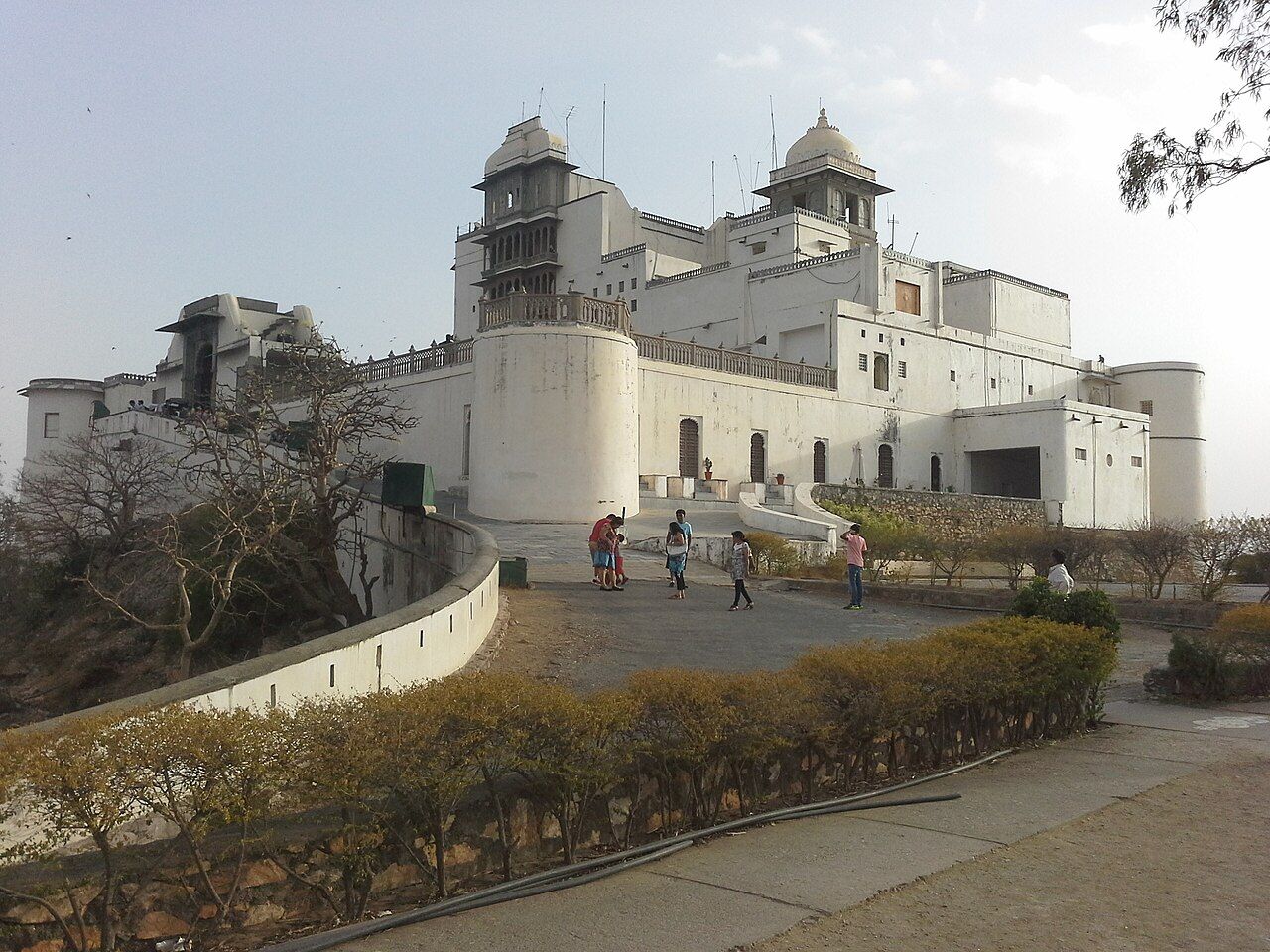
From almost anywhere in Udaipur, look west and you will see it: a pale building sitting on the highest hill like a crown on a head. That is Sajjangarh, usually called the Monsoon Palace. It is not the place to go for rich interiors or museum displays. It is the place to go for air, height and the whole lake country of Udaipur laid out below you as the light goes.
A palace built for the weather
Sajjangarh was built in 1884 by Maharana Sajjan Singh of Mewar, on the summit of Bansdara hill west of the city. Its purpose is in its popular name. From up here a ruler could watch the monsoon clouds build over the Aravalli hills and roll in across the valley, and see the lakes he depended on fill with rain.
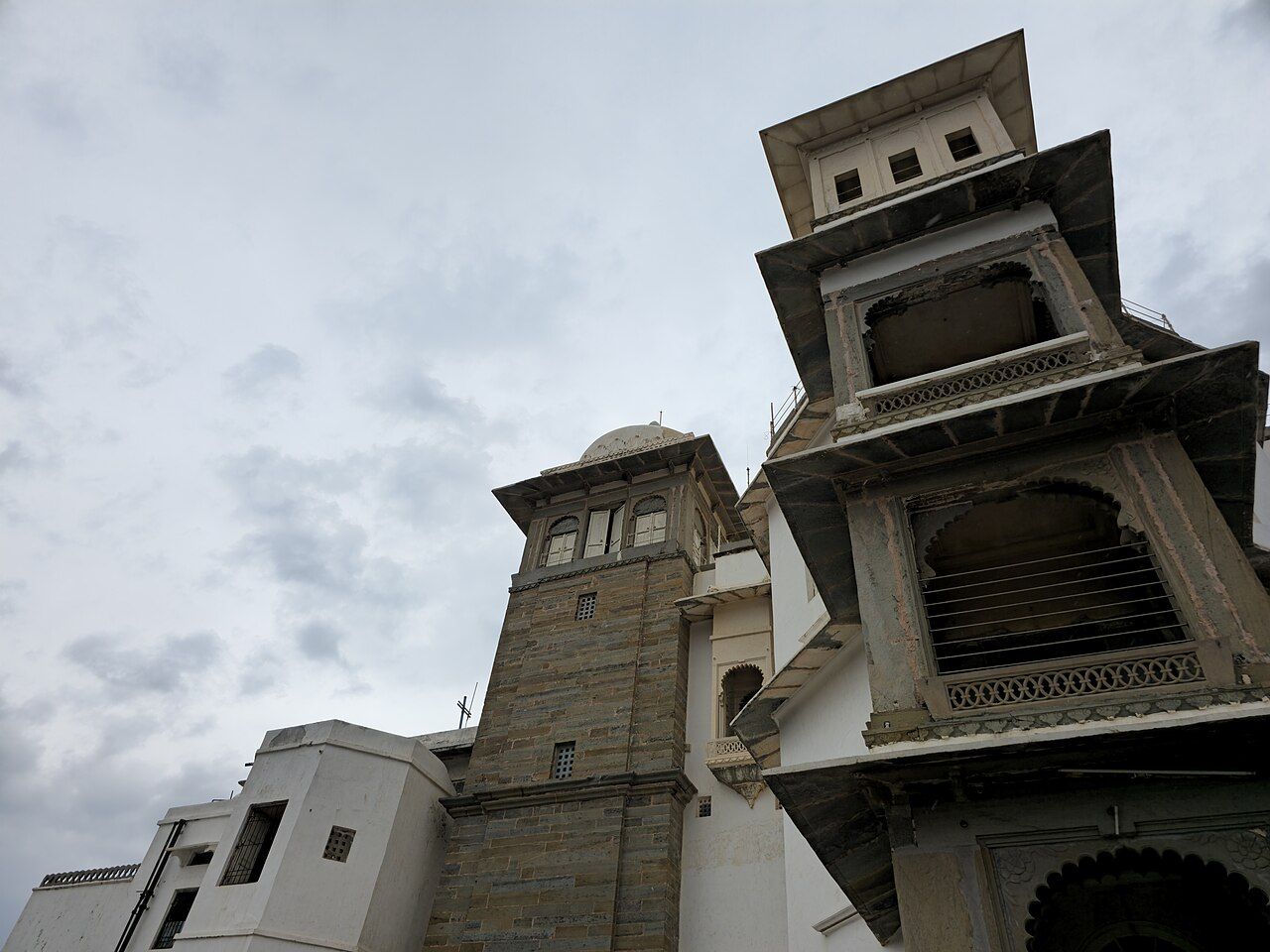
The palace is late by Mewar standards, and it shows. Where the City Palace grew over centuries, Sajjangarh went up quickly and on a single idea, and its lines are cleaner and plainer: white walls, round bastions, a few towers with domed tops and stacked balconies. It looks less like a fortress than a lookout that happens to be very grand.
The sanctuary road
The hill and its slopes lie inside the Sajjangarh wildlife sanctuary, and you reach the palace by road through it. There is a gate at the bottom of the hill where the sanctuary entry is checked, then a narrow road that switchbacks steeply up the slope through dry forest. Access arrangements have changed over the years, sometimes allowing private cars to the top, sometimes requiring visitors to use shared vehicles from the gate.
The forest is thin and scrubby for much of the year, then thick and green after the rains. You may see langur monkeys, peacocks and birds of prey along the road; larger animals keep out of sight. Drive slowly and do not stop on the bends. Near the bottom of the hill there is also a small biological park, separate from the palace, which some visitors combine with the trip.
What you find at the top
The road ends in a car park below the palace walls, and a short walk on paved ramps brings you up to the terraces. Inside, there is not a great deal: some rooms with displays about the palace and the sanctuary, a few staircases and balconies, the remains of decoration here and there. The building has been repaired more than once, and parts of it can feel bare.
The point is the terraces. Walk all the way round. On one side you look down on the old city of Udaipur, the long wall of the City Palace and the water beside it. On another you see Fateh Sagar Lake with its island garden and the city spreading round its shores. Further out there are ridge after ridge of the Aravallis, fading into haze. Somewhere down there are the roads to Kumbhalgarh and Ranakpur.
 Worth the detour · KumbhalgarhKumbhalgarh and its long wall
Sunset over the lakes
Most people come in the late afternoon and stay for sunset, and that is the right instinct. As the sun drops behind the western hills, the lakes below turn silver and then copper, the white palace on the hill catches the last warm light, and the city lights come on one by one. On a clear evening in the cool season the view stretches for many kilometres.
The same thing that makes sunset good makes it busy. The terraces fill, the car park fills, and the shared vehicles queue. Go up a good hour before sunset, walk the whole terrace while it is still quiet, then pick your spot. When the light goes, the sanctuary gates close soon after, and you will be asked to come down; do not linger in the dark.
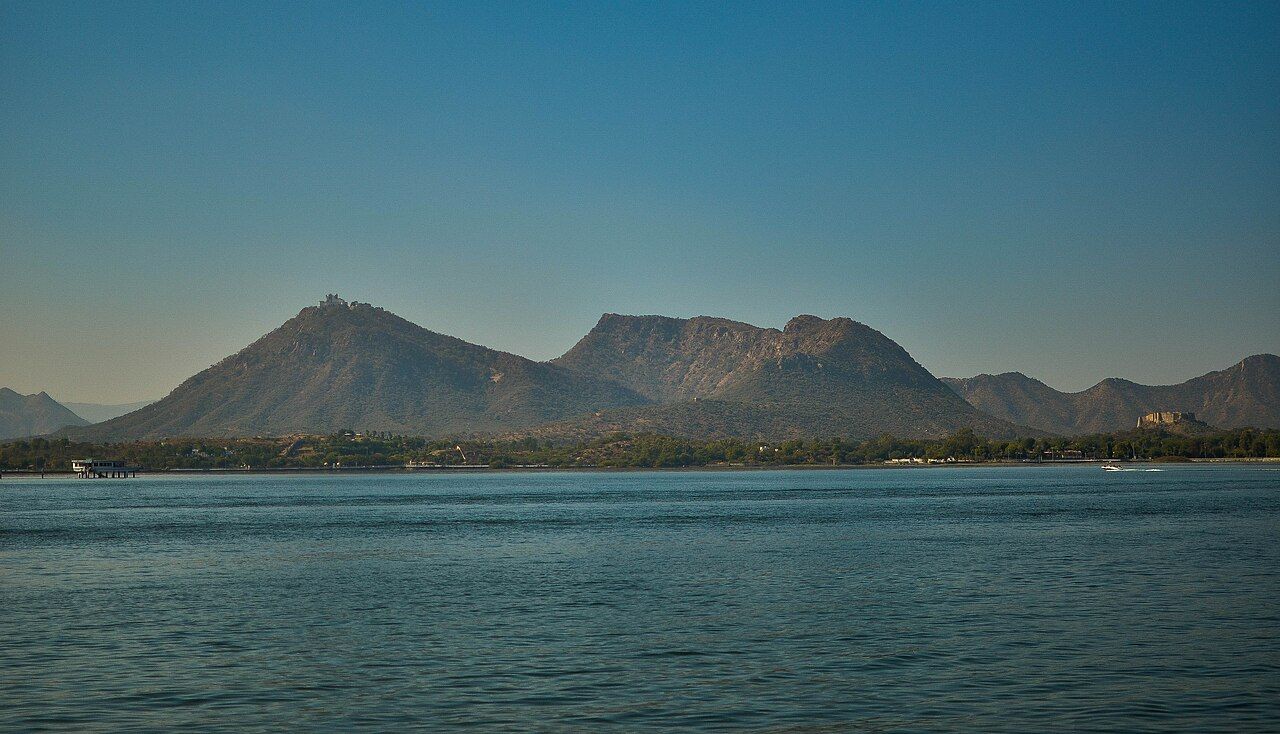
From the lake you can turn the view round. Out on Lake Pichola or from the shore of Fateh Sagar in the evening, look west and you will see the palace on its hill, a small pale shape against the sunset, sometimes lit up after dark.
Sunset light on the Bansdara hill
The comfortable months are October to March, when the air is clearer and the afternoons are mild. In April, May and June the heat is fierce, the hills are brown and the haze can flatten the view. The palace's own season is the monsoon, roughly July to September: this is when the name makes sense, with clouds piling up over the hills and the forest turning green. Rain can make the road slippery and the views come and go, but if you catch a clearing between showers you will see what Sajjan Singh had in mind.
Whatever the month, take water, something warm for the wind on top, and binoculars if you have them. Hours, sanctuary charges and vehicle rules change; expect a small fee for the sanctuary and the palace.
Pairing the hilltop with the lakes below
Sajjangarh is an easy half-day add-on to a city day in Udaipur. A good plan is the palace and old lanes in the morning, a long lunch and a rest through the heat, then the drive west in the late afternoon for sunset. If you have a car and driver, the trip is straightforward; if not, auto-rickshaws and taxis will take you to the sanctuary gate.
Coming back down in the dusk, you see the city lights spread out round the lakes, and the hill you have just left becomes another dark shape on the skyline. It is a good way to end a first day in Udaipur, with the map of the place fixed in your head from above.
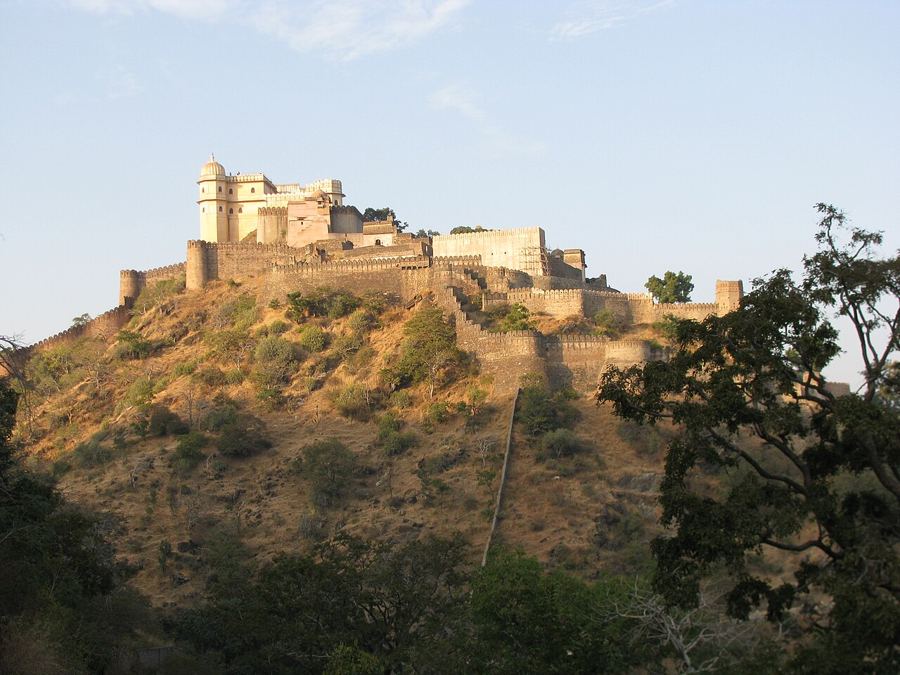
Next in Mewar: Kumbhalgarh and its long wall