
Road noteAbout two to three hours by road from Udaipur, the last stretch winding through hills. Parking below the gates, then a steep walk up. Carry water.
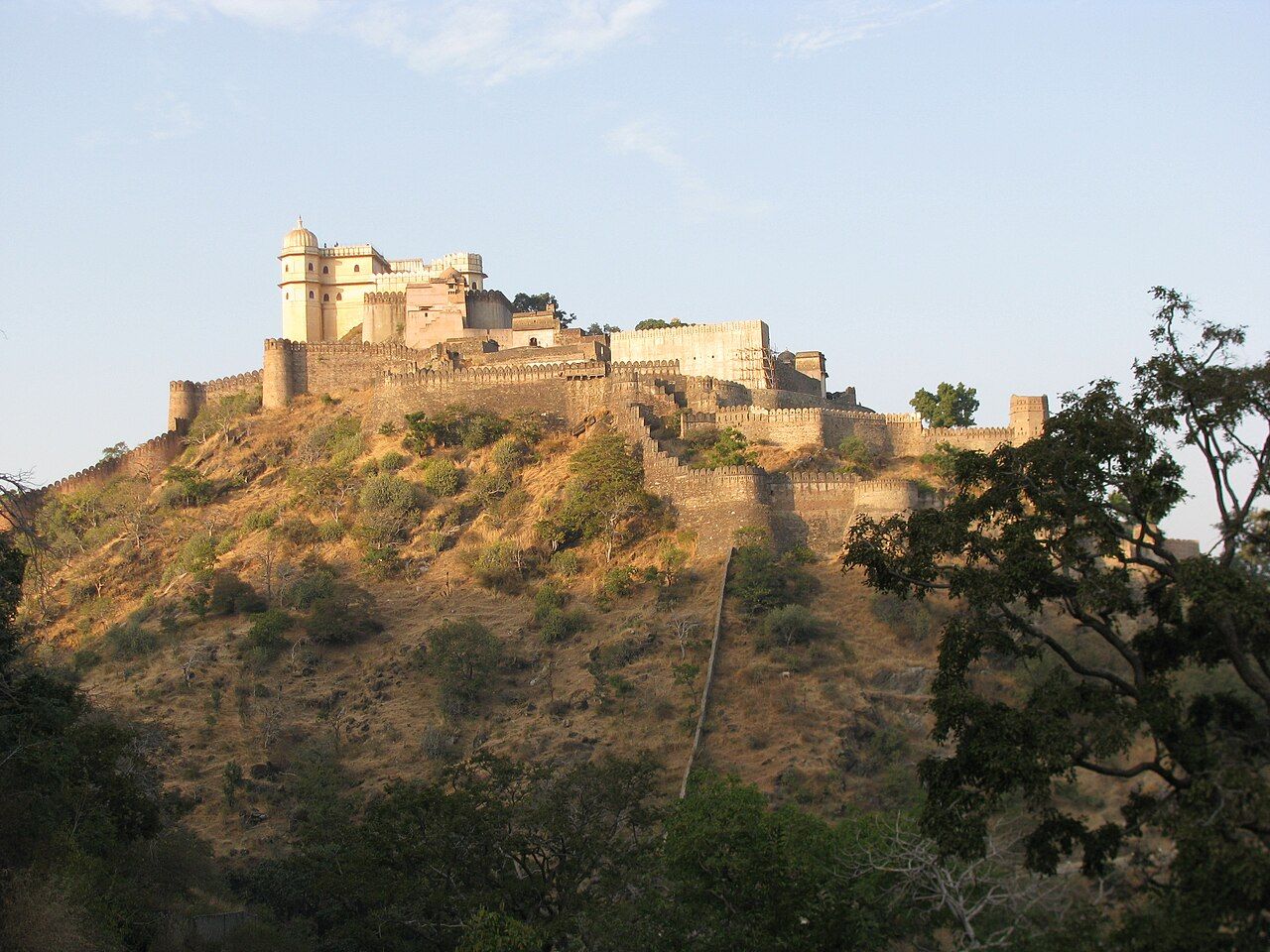
You see the wall before you see the fort. Coming up through the Aravalli hills, the road bends round a shoulder of rock and there it is, a crenellated line running along a ridge, dropping into a valley, climbing the next hill and disappearing over it. Then another stretch appears further off. Kumbhalgarh is a fortress built on the scale of the landscape, and for once the landscape does not win.
Rana Kumbha's mountain fortress
The fort was built in the fifteenth century under Rana Kumbha, one of the great builders among the rulers of Mewar, on a ridge of the Aravallis about 80 to 85 km north of what is now Udaipur. It guarded the hill passes between Mewar and Marwar to the west, and from its upper terraces you can see why: the hills fall away on the far side towards the plains, and anything moving below would have been visible from a long way off.
Kumbhalgarh's reputation rests on its strength. It sits on a high ridge with deep valleys on several sides, behind a series of fortified gates, and it held out against attackers for most of its history. When Chittorgarh was under threat, Kumbhalgarh was a place of refuge for the Mewar family. It is also, by tradition, the birthplace of Maharana Pratap, the sixteenth-century ruler remembered across Rajasthan for his resistance to the Mughals, and you will hear his name often here.
The long wall
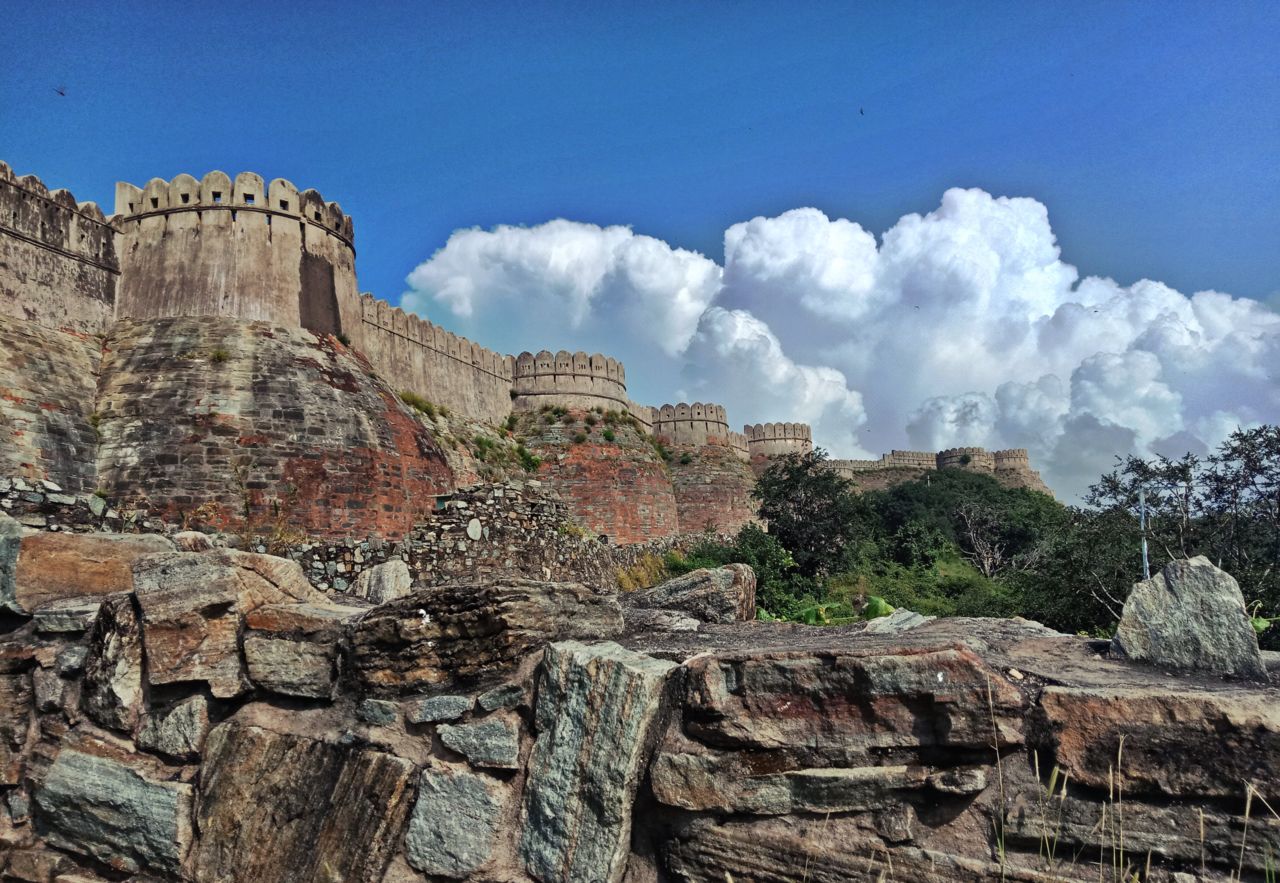
The wall is the reason most people come. Its length is often given as about 36 km, which makes it one of the longest continuous fortification walls anywhere, and it is wide enough along much of its course for several people to walk side by side on top. It follows the ridges, plunges into ravines and climbs out again, studded with round bastions and lined with crenellations.
You do not need to walk all of it, and almost nobody does. Short stretches near the main gates and around the inner fort give you the feel of it: the stone underfoot, the drop on either side, the line of bastions marching off towards the next hill. Go early or late, when the stone is cool and the light is low and golden. In the middle of the day there is little shade on top, and the stone throws the heat back at you.
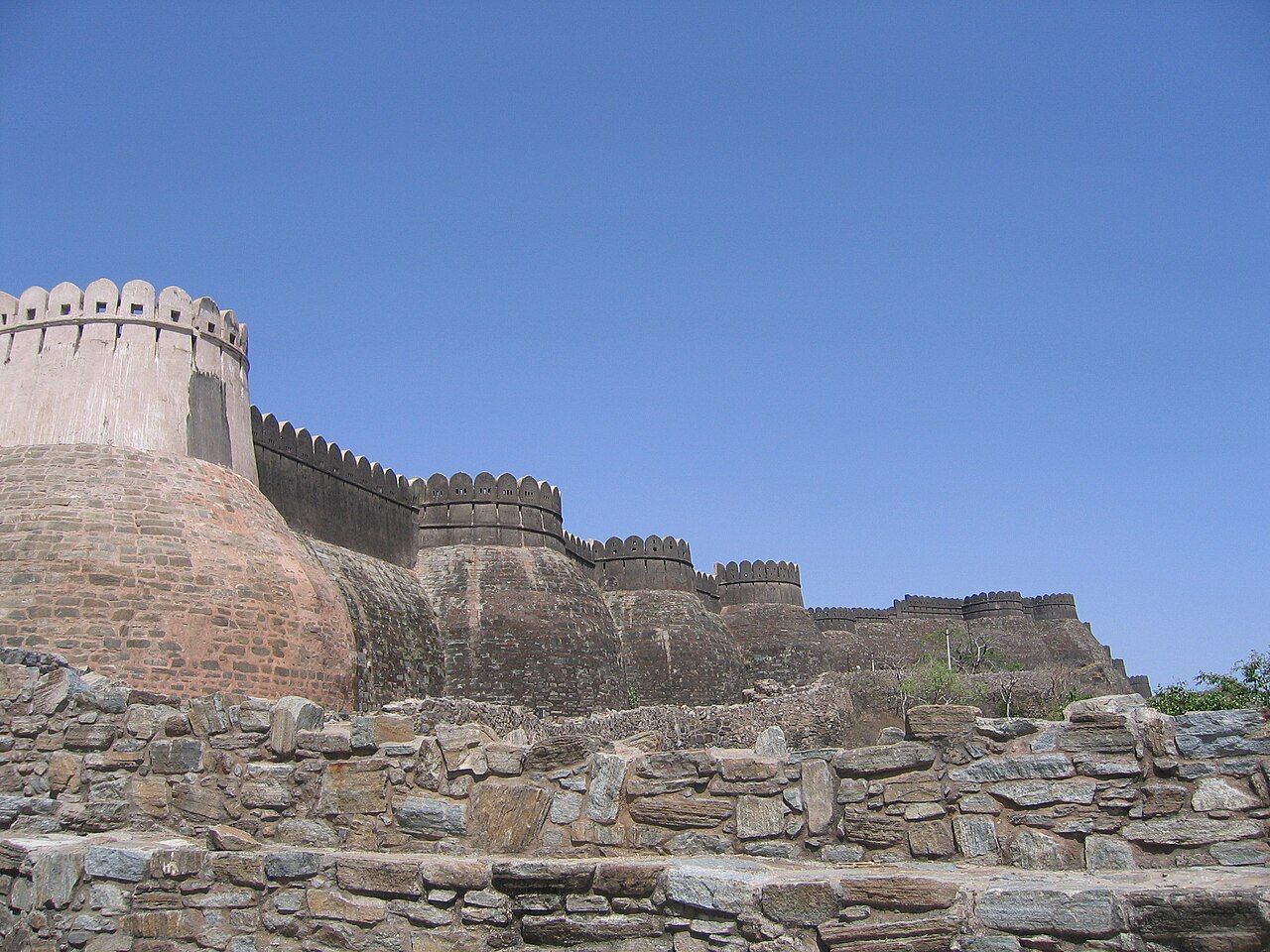
Take care on the wall. Some sections have no railing, steps are uneven, and the stone can be loose in places. Wear proper shoes, not sandals, and keep children close. If you want to walk a longer section, ask at the fort which parts are open and safe; conditions and access change.
Gates, temples and the climb
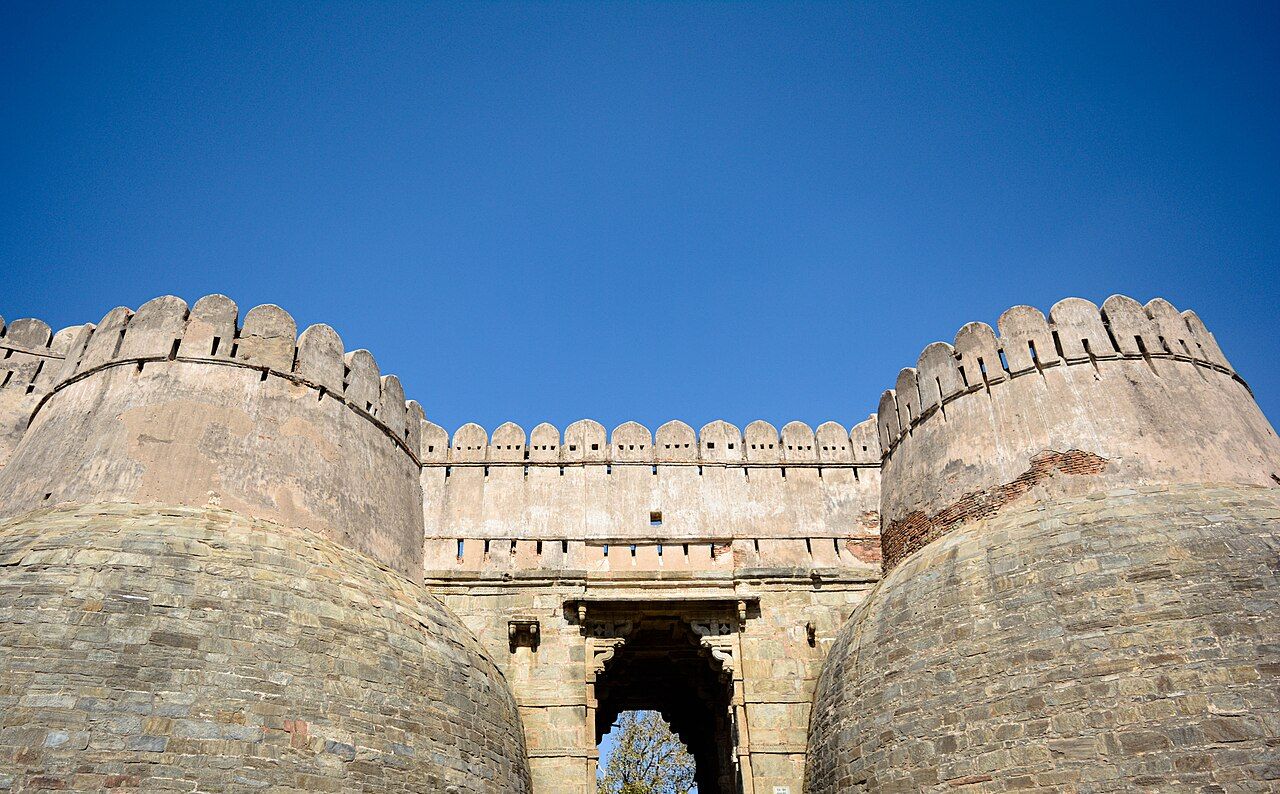
From the car park you pass through a series of gates, each set at an angle to the one before so that an attacking force would have had to turn and slow. The main gates are massive, flanked by huge rounded bastions of grey stone. Then the path climbs steadily towards the inner fort, with the palace buildings rising above you.
Inside the walls the fort is much more than a fortress. Dozens of temples are scattered across the hillsides within its circuit, Hindu and Jain, some still in worship, some ruined, some no more than a plinth and a few carved pillars in the grass. The Neelkanth Mahadev temple, dedicated to Shiva, is among the best known. Wandering between them is one of the quiet pleasures of a visit; many people never leave the main path, and you can have a temple to yourself in a few minutes' walk.
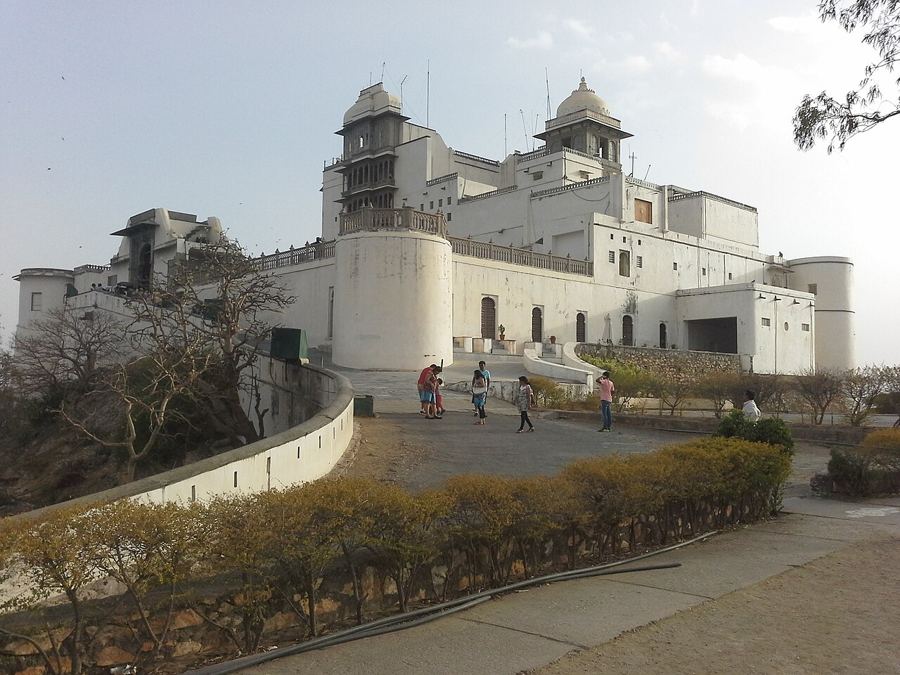 Worth the detour · UdaipurSajjangarh, the Monsoon Palace on the hill
Where a temple is in worship, take your shoes off before you enter, cover shoulders and knees, and ask before photographing anything inside. In ruined temples, step carefully: the stone is old, and snakes like the shade.
Badal Mahal at the top
At the highest point of the inner fort sits Badal Mahal, the palace of the clouds. The name is not a figure of speech: on a misty monsoon morning cloud really does drift through the courtyards. The rooms are small and the climb up is steep, but the painted walls and the views reward the effort.
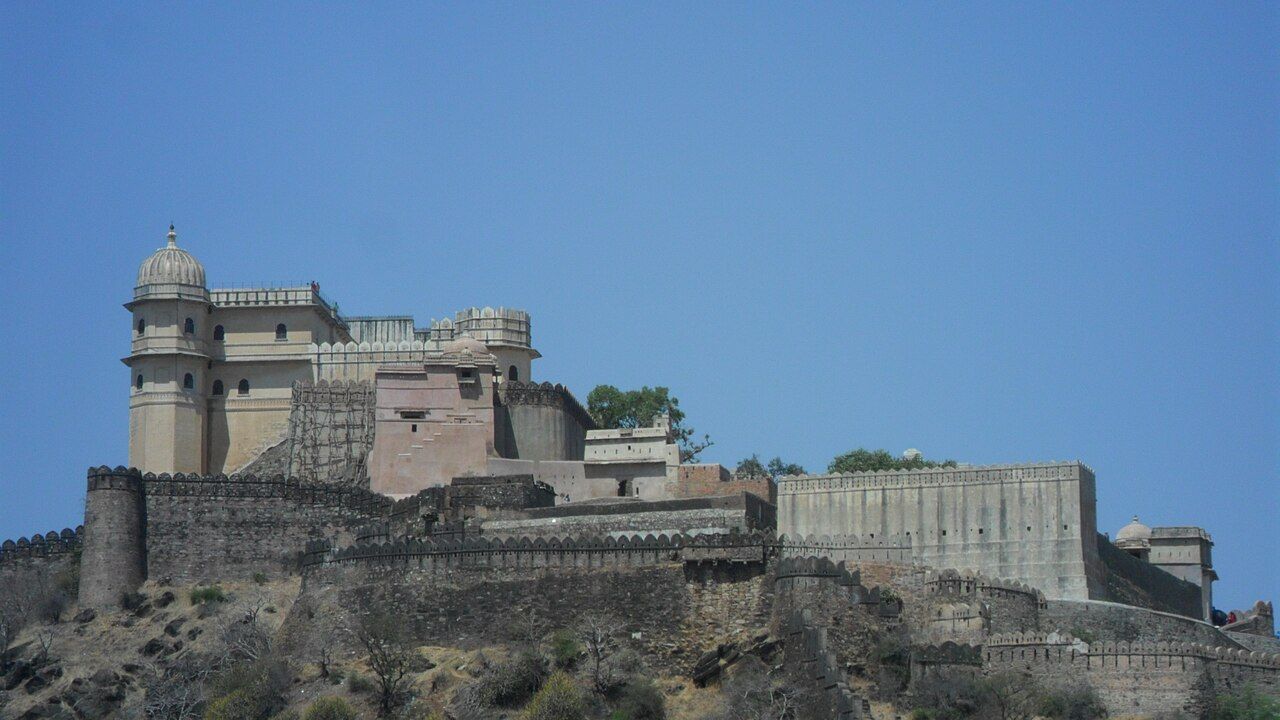
From the terraces you look out over the whole circuit of the wall, winding across the hills, and beyond it to the ridges of the Aravallis on one side and the plains of Marwar on the other. On a clear day in the cool season, the view goes on and on. It is a good place to sit and let the scale of the place settle.
It is a good place to sit and let the scale of the place settle.
A world heritage fort in a sanctuary
Since 2013 Kumbhalgarh has been one of the six forts recognised together by UNESCO as the Hill Forts of Rajasthan, alongside Chittorgarh, Ranthambore and others. The listing is about how these forts use the hills: walls that follow the ridges, water stored in tanks and reservoirs, temples and palaces built within a defensive circuit.
The fort is also surrounded by the Kumbhalgarh wildlife sanctuary, a stretch of dry forest across the hills. You will see langurs on the walls and peacocks in the scrub, and the drive up passes through some of the sanctuary's edges. In the evenings a sound-and-light show is held at the fort, telling the story of the place against the lit-up walls; times and languages change.
A long day on the Aravalli ridge
From Udaipur, Kumbhalgarh is a full day: about two to three hours each way by road, the last part winding through the hills. Many people combine it with the Jain temple at Ranakpur, on the other side of the hills, either on the same long day or on the way to Jodhpur. If you can stay nearby, you can see the fort at dawn or stay for the evening show without the long drive back in the dark.
If you are driving yourself or with a driver, read our notes on Rajasthan's roads before you set out: hill roads, animals on the road, and the importance of not driving after dark. In Udaipur itself, the City Palace makes a good companion visit, the palace of the city to the fort of the hills.
The comfortable season is October to March. In April, May and June the heat on the walls is intense, and in the monsoon the paths can be slippery, though the hills are green and the clouds drift through Badal Mahal as its name promises. Whenever you go, start early, carry plenty of water, and leave time to sit on the wall and look.
Next in Mewar: Ranakpur's marble forest of pillars