
Road noteAbout three hours by car from Jaipur via Sikar, roads mostly good. Park near the centre and walk; lanes are narrow and dusty, and museum hours vary.
Nawalgarh is larger and busier than Mandawa, its better-known neighbour about 30 km to the north. Its markets are full of ordinary trade, its roads carry buses and tractors, and it can take a few minutes to find the painted town inside the working one. Once you do, the reward is unusual: here you can see the frescoes of Shekhawati both at their freshest, in restored havelis open as museums, and at their most worn, in the lanes outside.
That contrast is the reason to come. Spend time in a restored courtyard first, then walk out and look at the faded walls with new eyes.
A town with a founding date
Nawalgarh was founded in 1737 by Thakur Nawal Singh, one of the Shekhawat Rajput rulers of the region, and it takes its name from him. Like the other painted towns, it grew wealthy through its merchant families, who prospered first on the caravan trade and then in the business houses of Calcutta and Bombay in the 18th, 19th and early 20th centuries. The money came home as havelis, temples and wells, and the town became one of the richest centres of fresco painting in the region.
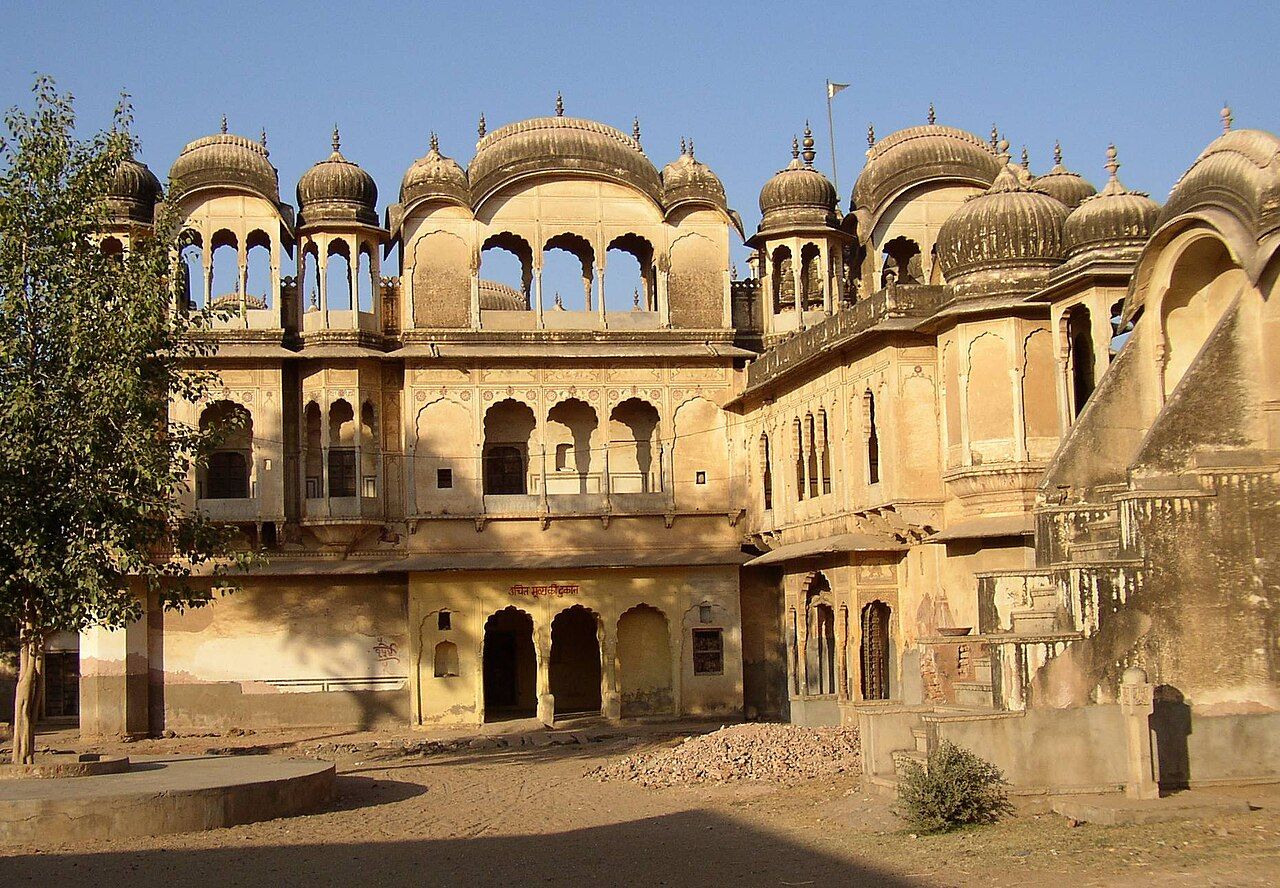
The old centre still has the outlines of that era: tall havelis with painted upper storeys and deep eaves, carved wooden doors, temple spires above the rooftops, and open squares where markets have been held for generations.
The haveli museums
Two havelis in Nawalgarh are open to visitors as museums, and they are the best place to start. The Dr. Ramnath A. Podar Haveli Museum is a large merchant house restored with care, its painted facade and courtyards brought back to something close to their original brightness, with displays inside on the life and crafts of the region. The Morarka Haveli Museum has also been restored, and its courtyards are lined with frescoes that have kept much of their colour.
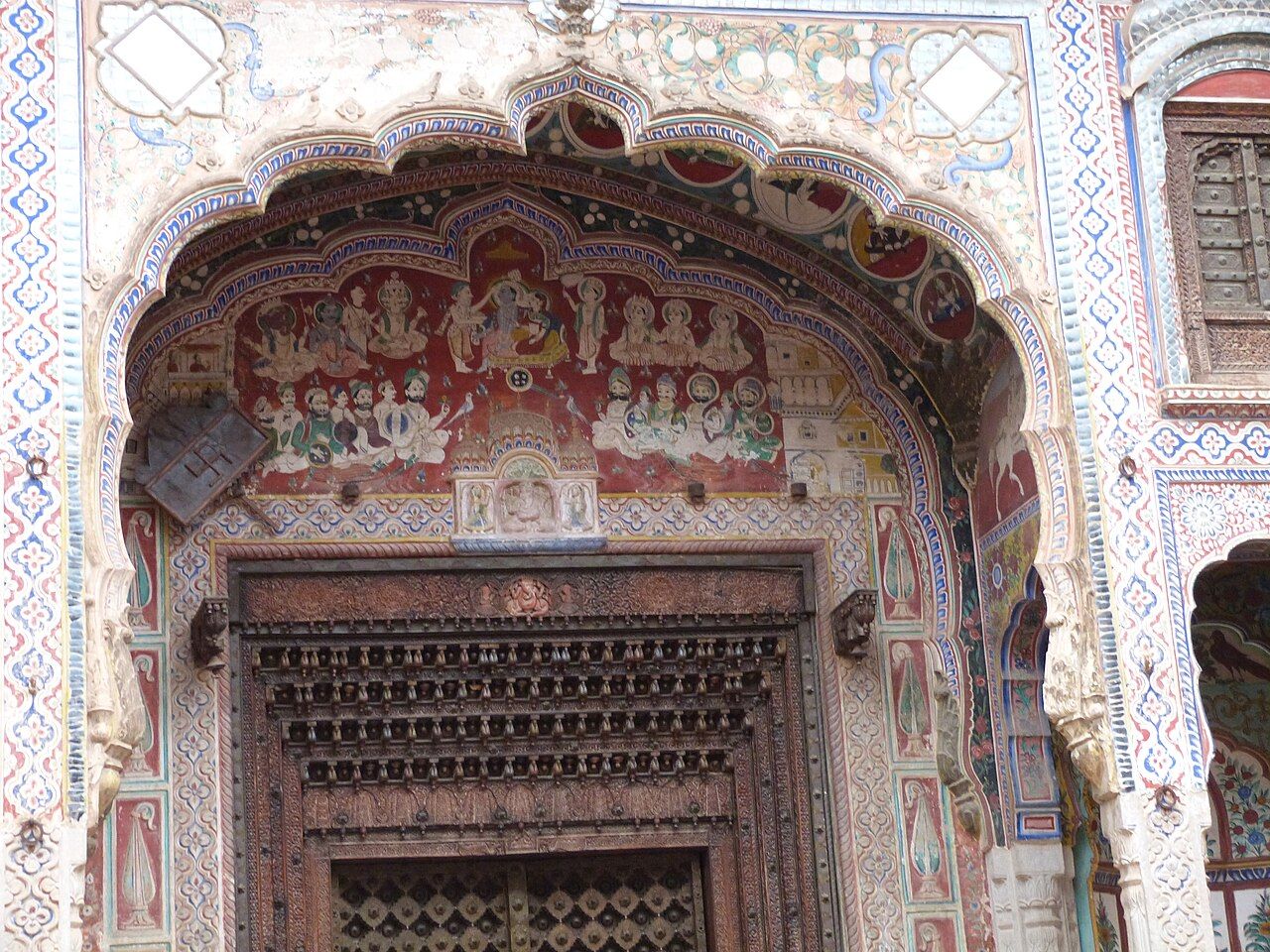
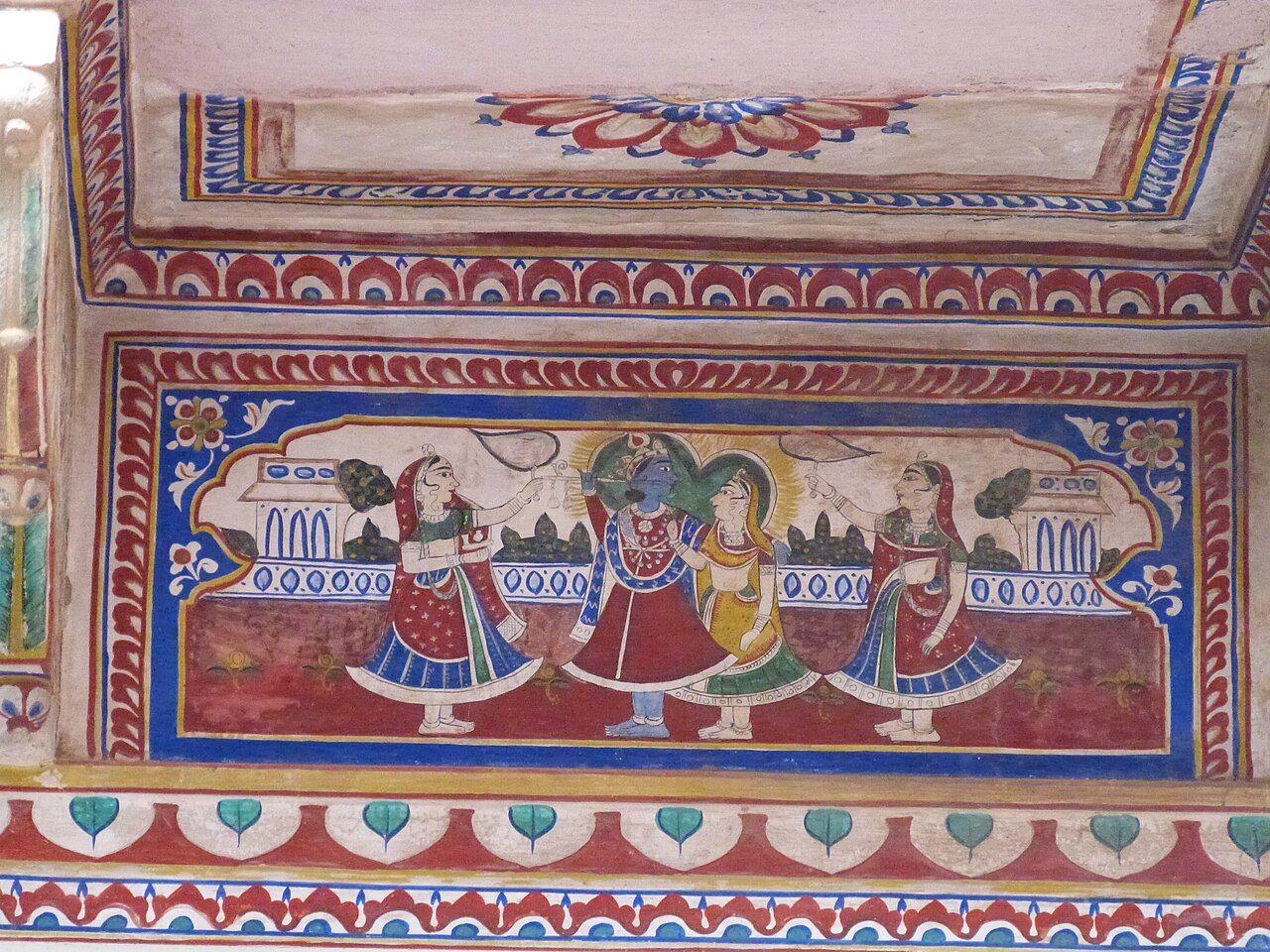
Inside, look at how a haveli was organised. The outer courtyard was usually for business and visitors, the inner one for the family, and the doorway between them was often the most richly decorated part of the house. Above the doors you find gods in assembly, Krishna with his companions, or rows of seated figures, framed by bands of flowers and birds. Arched galleries around the courtyards are painted with vases, sprays of flowers and parrots, in a lighter, more decorative style than the narrative panels outside.
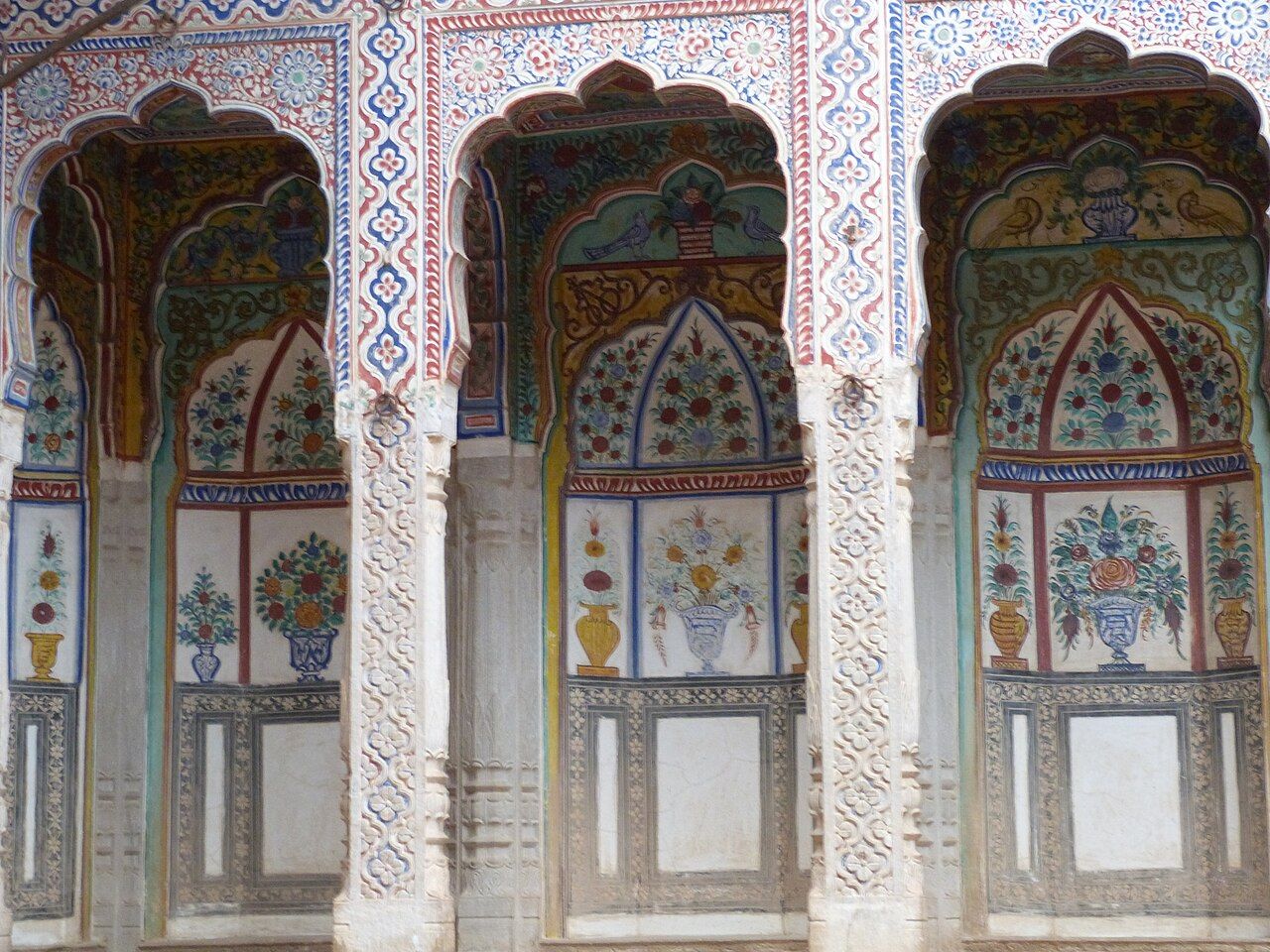
Take your time with the details: the scale of these houses makes it easy to look only at the big panels and miss the small ones.
Restoration itself is worth a thought while you are here. Bringing back a painted wall means cleaning away soot and grime, consolidating plaster that has come loose, and deciding how much missing paint to fill in. Too little and the panel keeps crumbling; too much and the old work disappears under new. The museums show one answer to that question. The lanes outside show what happens when nobody asks it at all, and both are part of the story of the town.
Notice, too, the woodwork and metalwork that the paintings frame. Haveli doors were made heavy and studded with iron, often with a smaller door cut into the main one for everyday use. Brackets under the balconies are carved, windows are screened with lattice, and ceilings in the reception rooms may carry painted or mirrored decoration of their own.
 Worth the detour · FatehpurFatehpur and the step-well of Shekhawati
The lanes outside
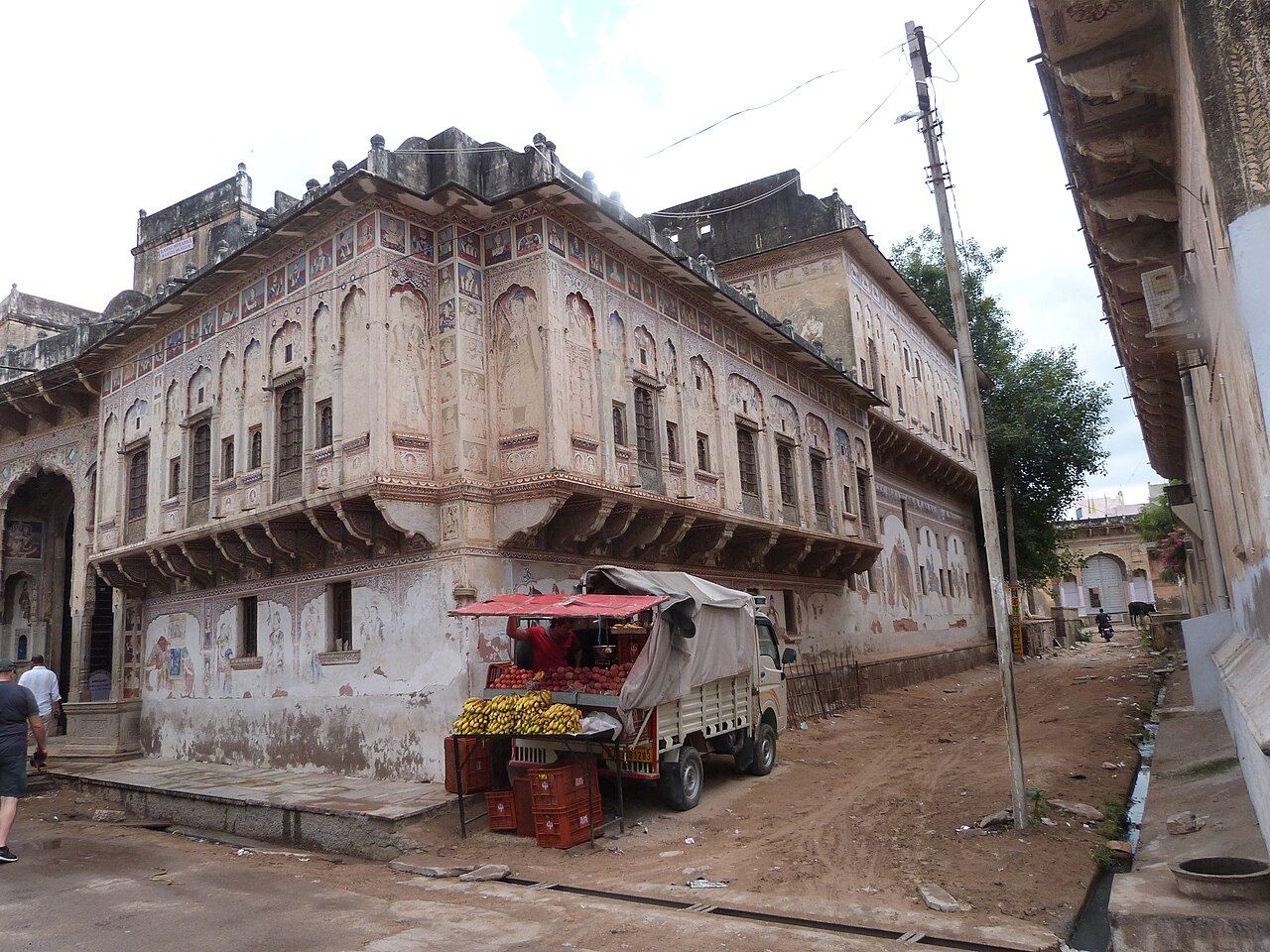
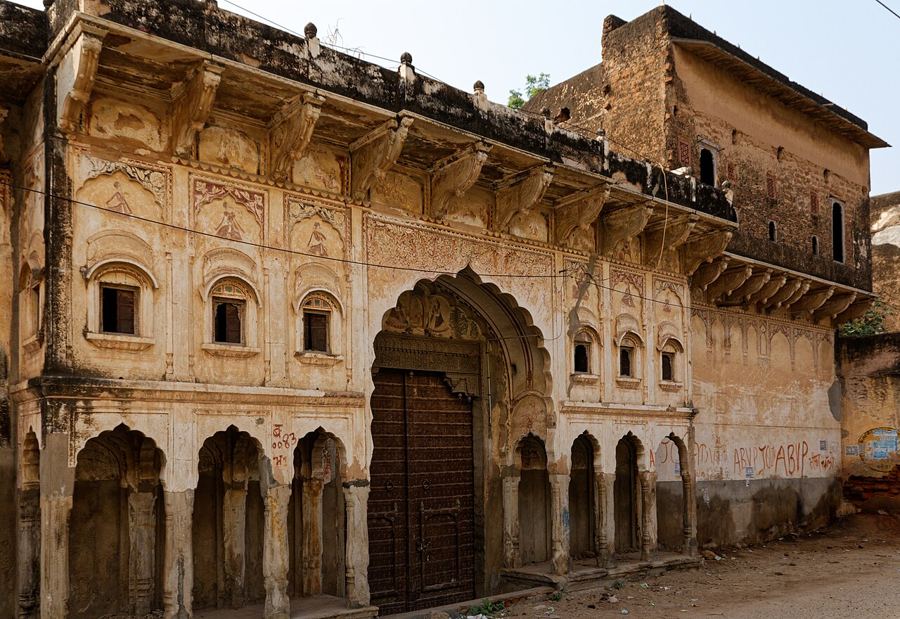
Step back into the streets and the condition of the havelis changes sharply. Some are lived in and kept up; many are locked, their owners living in the big cities; a few are close to collapse. Painted panels run along walls that also carry electricity cables, posters and the scuffs of daily traffic. Fruit carts park in the shade of facades covered with gods and horsemen, and cattle wander past carved doors.
Look up as you walk. The best-preserved painting often survives high under the eaves, where rain and hands reach less, and a pair of binoculars brings it close. Look for the same mix of subjects you see across the region: gods and epics, processions and hunting scenes, and, on later houses, trains, cars and European visitors.
At some locked havelis a caretaker may offer to open the courtyard for a small fee. Always ask before entering any courtyard, even if the door stands open, and accept a refusal politely. Do not climb on crumbling steps or pull at loose plaster. Ask before photographing people, and keep your voice down near temples, where shoes come off and shoulders and knees should be covered.
On foot between the painted houses
A good day in Nawalgarh follows the light and the heat. Start early with one of the museums, when it is cool and quiet. Then walk out into the old lanes for an hour or two before the sun gets high, following whichever street has the most painted walls. Rest through the middle of the day, and visit the second museum in the afternoon. In the last hour of light, walk again: low sun warms the ochres and reds on the facades and brings out details the noon glare hides.
There is no need to plan a fixed path. The town is compact enough that you will cross your own route several times, and each crossing shows a wall you missed. Carry water and a hat; shade is patchy, and even in winter the middle of the day can feel warm.
The comfortable season runs roughly from October to March. Winter mornings can be chilly and hazy. From April to June the heat makes long walks hard, and during the monsoon from July to September, rain can leave the unpaved lanes muddy.
Nawalgarh in the wider region
Nawalgarh is about 140 km from Jaipur, which makes it one of the easier painted towns to reach, and it works well as a first or last stop on a loop. From here you can head north to Mandawa, then west to Fatehpur and on to the painted chhatris of Ramgarh. Distances between the towns are short, but roads through villages are slow, so allow more time than the map suggests.
Our notes on getting around Rajasthan by road cover hiring a car and driver and pacing a trip. Seeing the restored courtyards first and the faded lanes after is the best lesson in Shekhawati painting you can give yourself.
Seeing the restored courtyards first and the faded lanes after is the best lesson in Shekhawati painting you can give yourself.
Next in Shekhawati: Ramgarh's chhatris and quiet lanes