
Road noteBharatpur is about 55 km from Agra on a busy highway. The park gate is close to town; inside, motor traffic is restricted, so you ride or walk.
Most travellers rush past Bharatpur on the way between Agra and Jaipur, and that is a pity, because just south of the town lies one of the great bird sites of Asia. Keoladeo National Park is a patchwork of shallow lakes, reed beds, grassland and scrubby woodland, crossed by raised earth dykes. In a good winter the water is loud with ducks and geese, the trees are crowded with nesting storks, and the paths are quiet enough to hear wings overhead. It is small, about 29 sq km, and almost entirely flat, which makes it one of the gentlest places in Rajasthan to spend a day outdoors.
A marsh made by people
The wetland is not wholly natural. Over the eighteenth and nineteenth centuries the rulers of Bharatpur dammed and channelled seasonal water into a low basin, creating a reservoir and then a marsh that drew waterbirds in huge numbers. The name comes from an old temple to Shiva, Keoladeo, which still stands inside the park, and many people also use the older name Ghana, meaning dense, for the thick woodland that once covered more of it.
For decades the marsh served as a royal shooting preserve. The rulers of Bharatpur held grand duck shoots for princes, viceroys and other guests, and the size of the bags on those days was recorded with some pride. That history ended in the second half of the twentieth century. The area became a protected sanctuary, was declared a national park in 1982, and in 1985 it was inscribed as a UNESCO World Heritage Site for its importance to birds.
Because it is made by people, the marsh also depends on people. Water comes from the monsoon and from canal supply, and in dry years the lakes shrink and some birds stay away. A wet monsoon usually means a rich winter; a weak one can mean long stretches of cracked mud. It is worth asking about water levels before you plan a trip around the birds.
What you see, and when
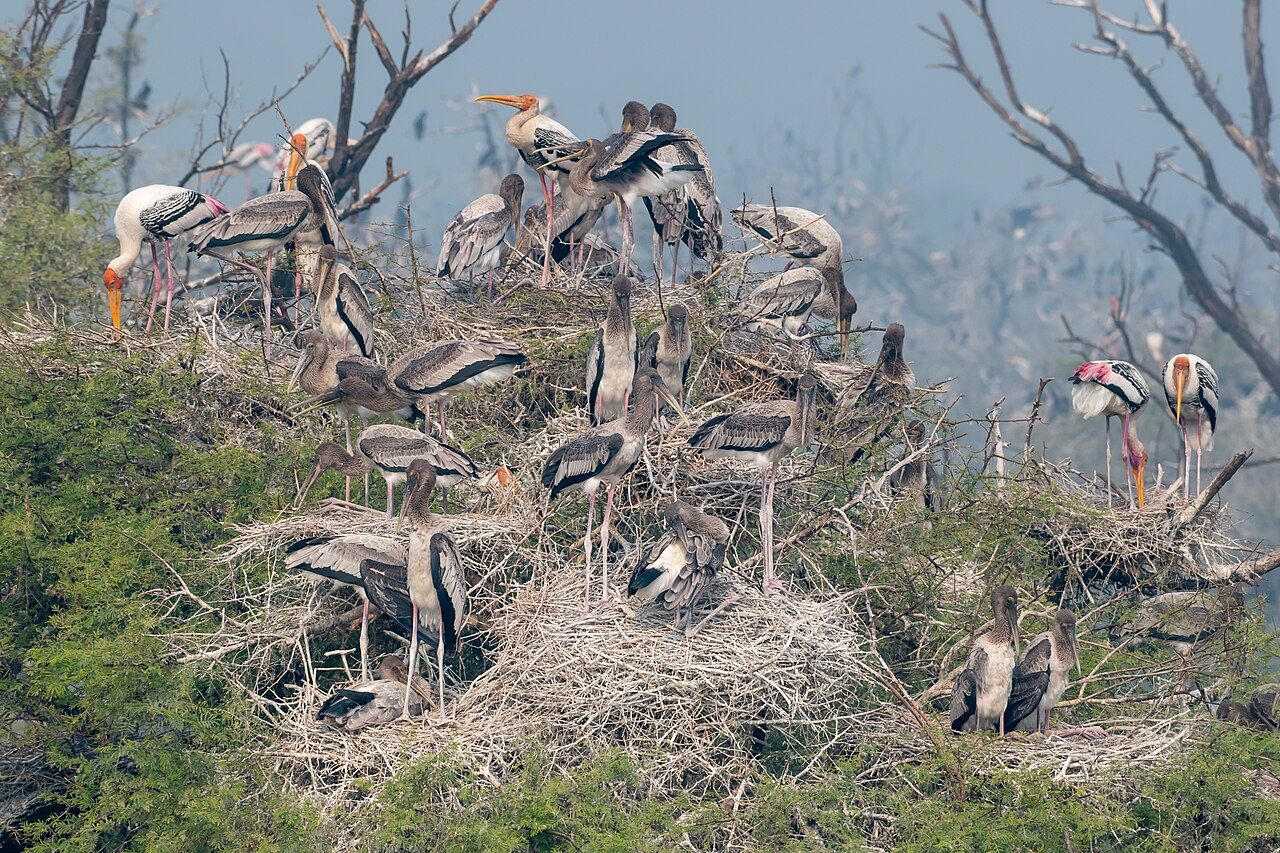
The season builds in stages. As the monsoon water settles, resident birds begin to nest, and the most famous colonies belong to the painted storks, which crowd onto trees standing in the water from late monsoon into autumn. Their nests are untidy platforms of sticks, and by early winter the trees are full of grey, fluffy young birds and adults with pink-tipped wings and heavy yellow bills.
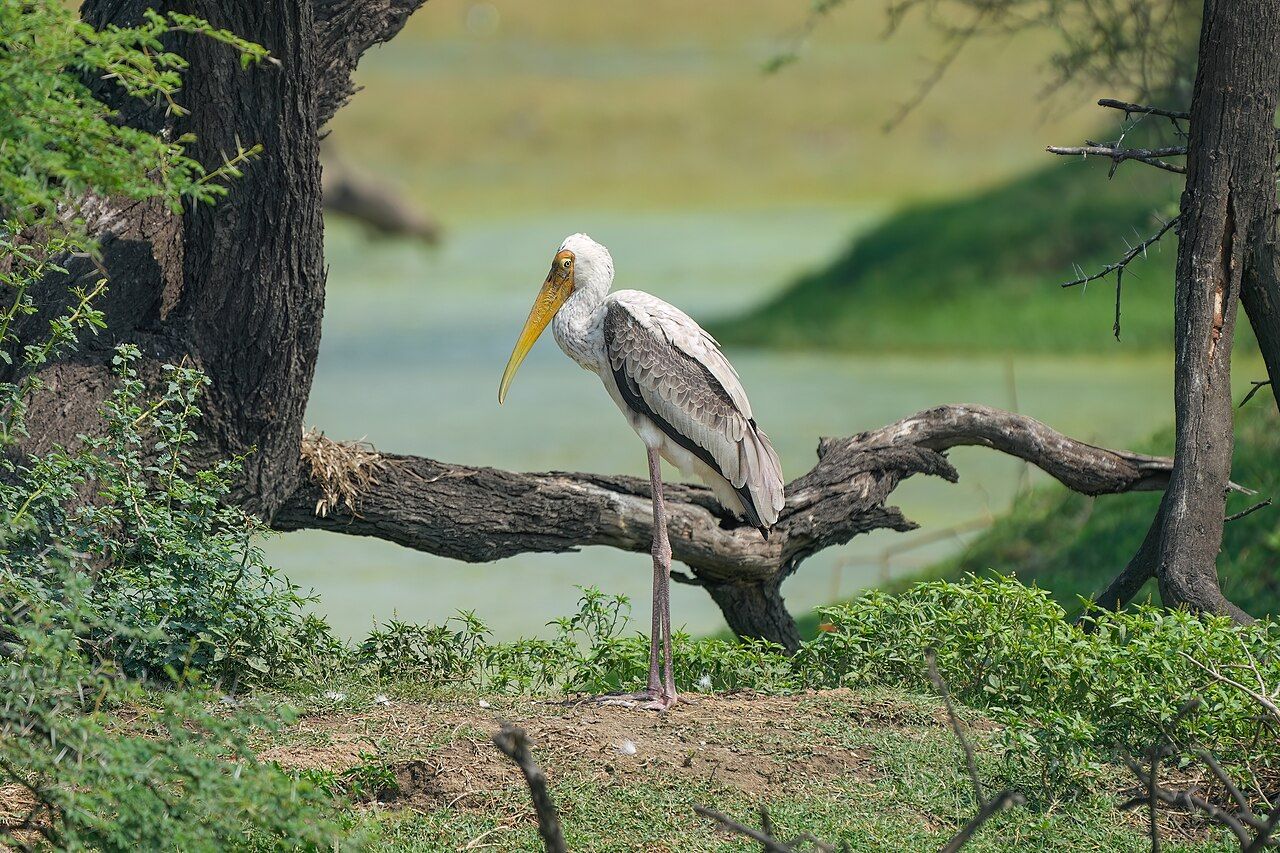
From around October the winter visitors arrive, many from Central Asia and further north. Ducks come in large rafts, along with geese, coots, waders and birds of prey that follow them. Herons, egrets, cormorants, darters and spoonbills work the shallows, and kingfishers sit on dead branches over the water. Cranes in general still winter in the region, but one bird that made Keoladeo famous is gone from it: the Siberian crane has not been seen here for many years, and the park's old fame for it belongs to history.
The comfortable months for a visit run roughly from October to February, with November to January often the busiest for birds. By March the migrants are leaving and the days are warming; from April to June the heat is fierce and much of the marsh dries out.
Bicycles, rickshaws and walking the dykes
Motor traffic is kept out of most of the park, which is a large part of its peace. You explore on foot, by bicycle, or in a cycle-rickshaw. Bicycles can usually be hired near the gate, and riding them along the dykes is the freest way to go: you stop where you like, wait as long as you like, and follow a call into the trees.
The cycle-rickshaw drivers at the gate are a particular part of Keoladeo. Many are trained and licensed by the park, and the best of them know the birds well, can point out a nightjar sleeping on a branch or an owl in a hollow, and know where the storks are nesting this year. Hiring one for a morning, with your binoculars and a field guide, is the closest thing to having a naturalist alongside you. Their rates are set or agreed at the gate, so settle the terms before you set off.
 Worth the detour · DeegDeeg's water palaces
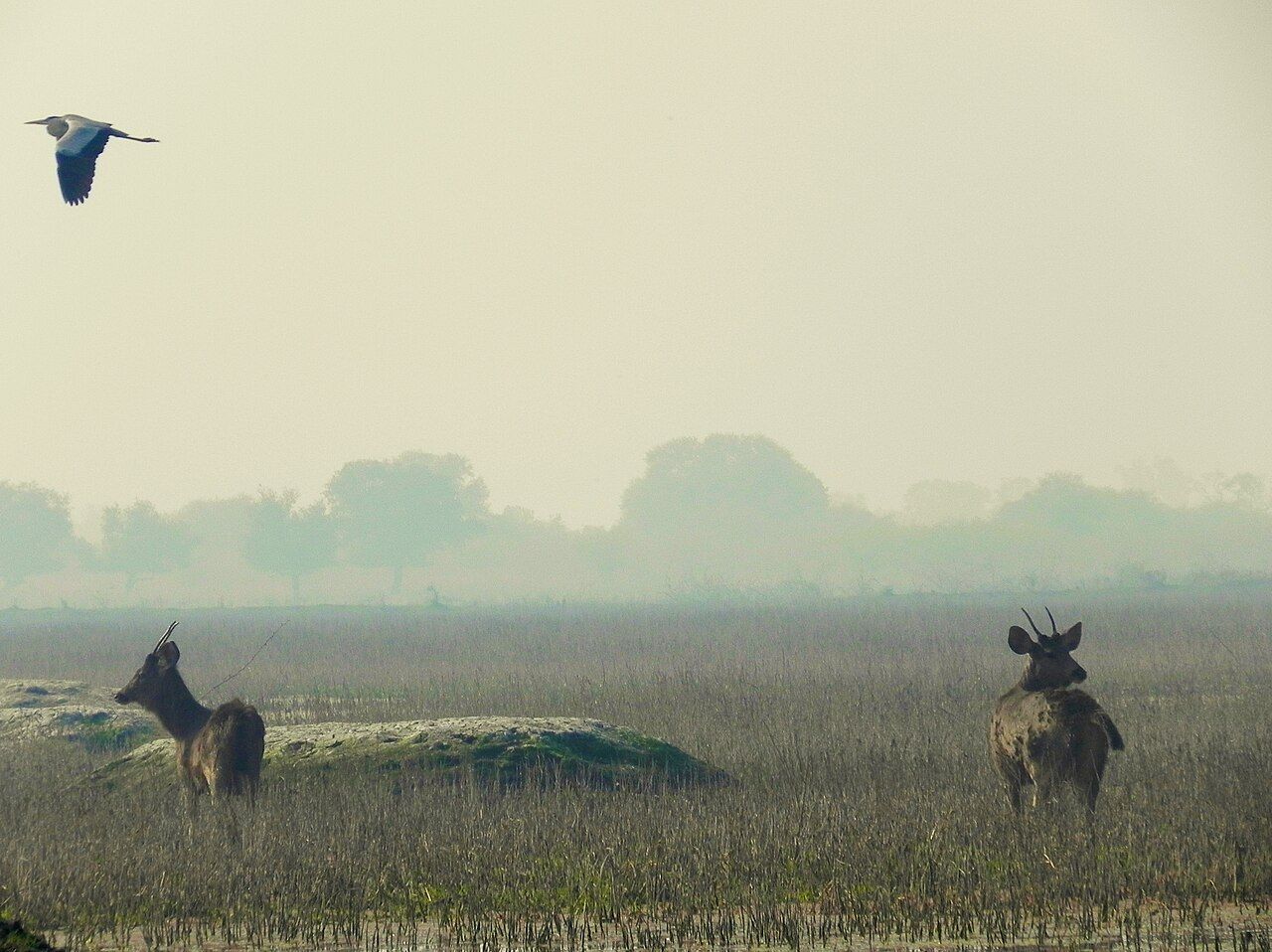
Walking is the third option, and on a cold morning it is the best. The main dyke runs south into the park for several kilometres, with side paths along the water. Mist lies over the marsh at dawn in midwinter, and the light is low and soft until mid-morning. You will hear far more than you see in the first hour: the bugle of geese, the clatter of storks, the splash of a heron landing.
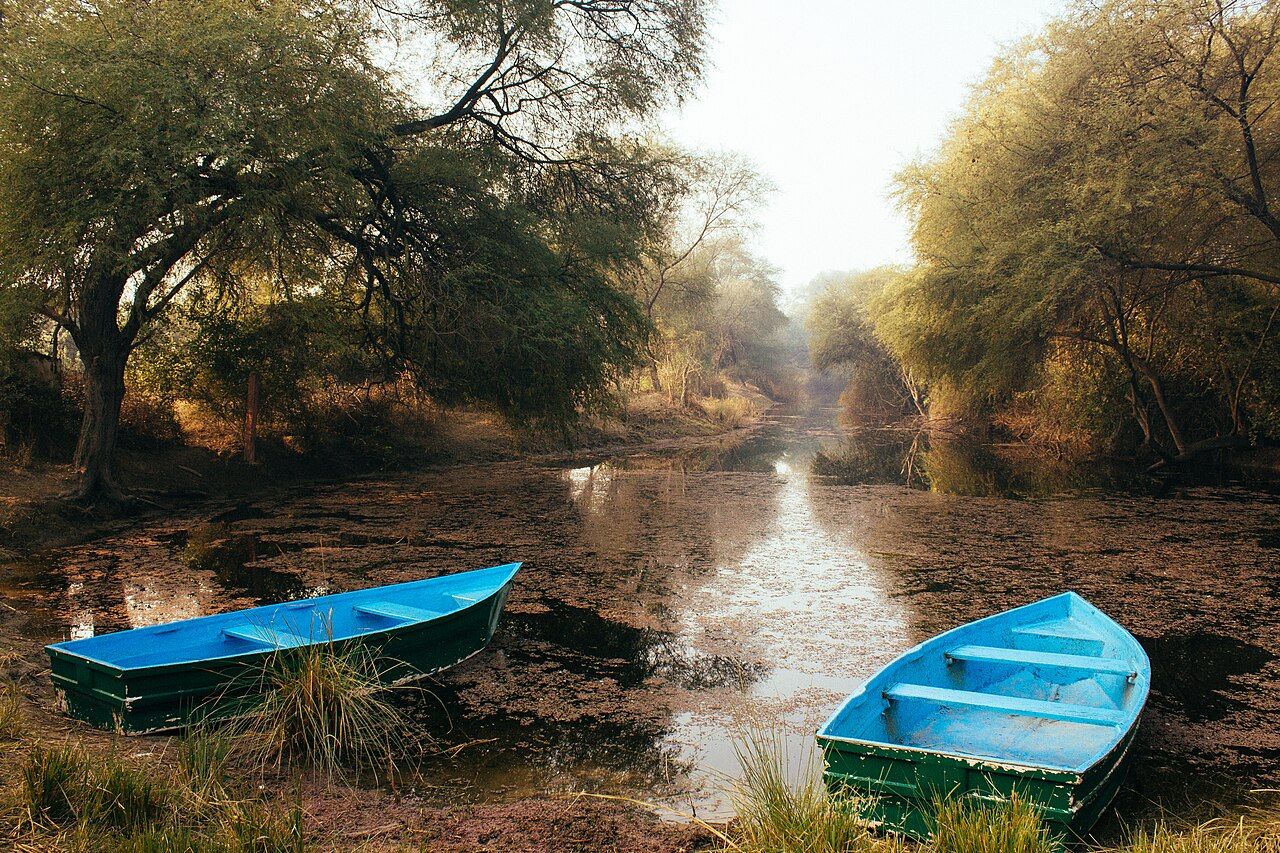
Dykes, bicycles and the slow marsh day
Arrive at opening time. Birds are most active in the first hours of light, and the paths are emptiest then. Wear layers, because a December dawn at Bharatpur is cold, and by noon you may be in a shirt. Bring water and something to eat, and keep any food out of sight of the monkeys near the gate.
- Go slowly. Most good sightings come from waiting in one place, not from covering ground.
- Keep your voice low and stay on the dykes; the nesting trees are easily disturbed.
- Carry binoculars, and if you have a long lens, a light support helps.
- Do not feed any bird or animal, and take every scrap of litter out with you.
Midday is quieter. Many visitors go back into town for lunch and return for the late afternoon, when the light turns gold over the water and the ducks fly between the lakes. If you can, stay for two mornings rather than one long day. The marsh changes a great deal from one dawn to the next, and the second visit is often the better one.
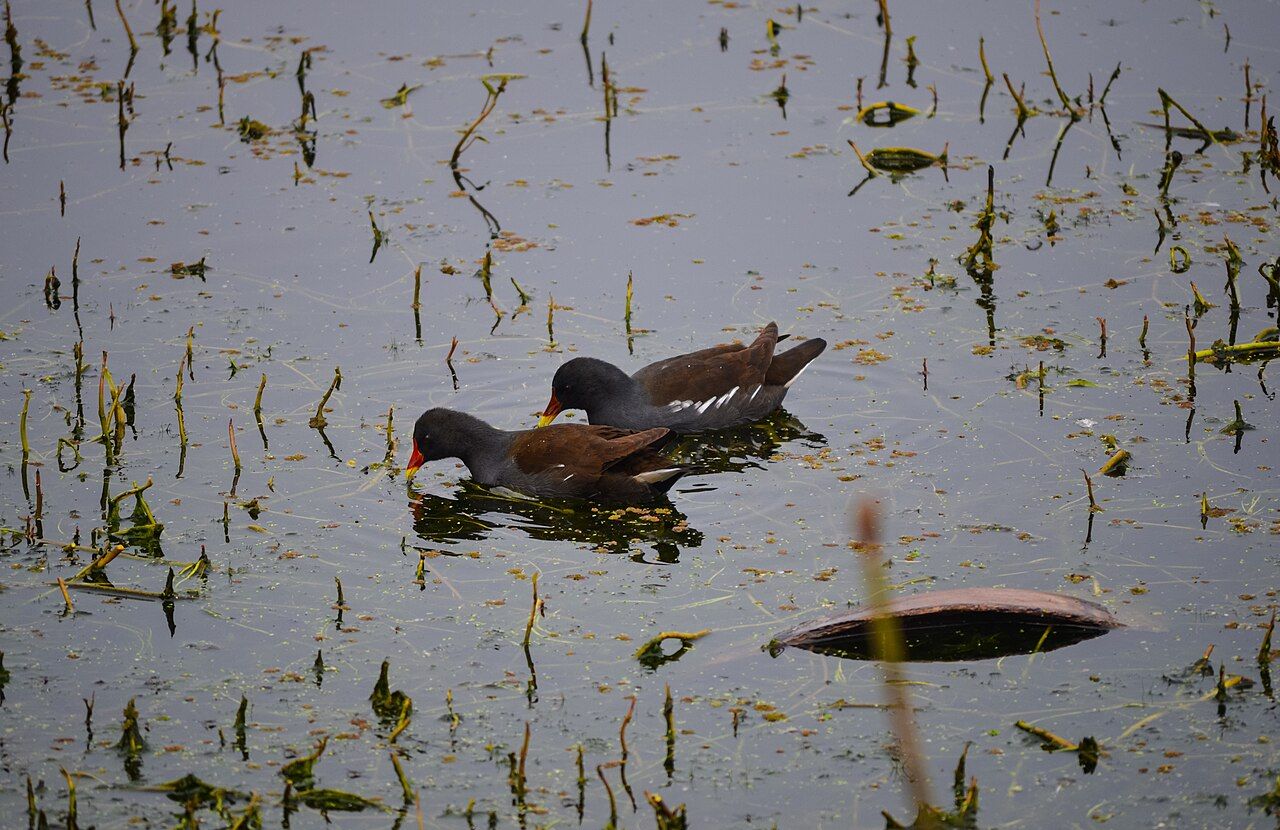
Most good sightings come from waiting in one place, not from covering ground.
Bharatpur and the road around it
Bharatpur is about 55 km from Agra, and it has its own railway station on the main lines, so it is easy to reach by train as well as by road. Many travellers come from Agra for a long day, but staying a night lets you see the park at its best. The town itself has a large earthen fort, Lohagarh, that withstood a long siege in the early nineteenth century, and it repays an hour's wander.
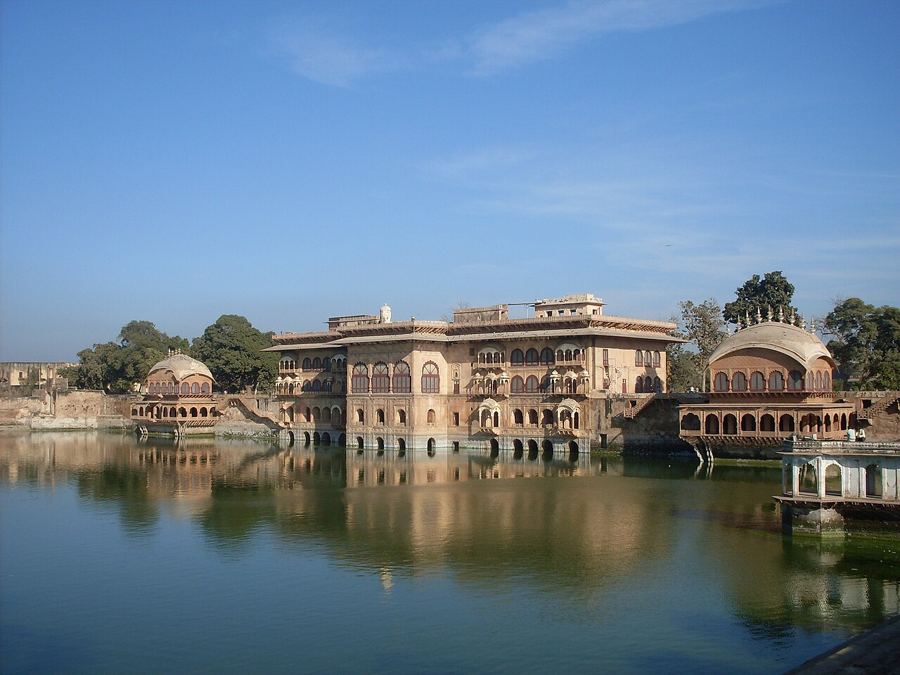
The eastern edge of Rajasthan rewards a slower loop. North of Bharatpur lie the water palaces and gardens of Deeg, an easy half-day out. To the south-west, a longer drive brings you to the fort and forest of Ranthambore, and to the west, past Alwar, the ruins of the abandoned town of Bhangarh sit beneath the Aravalli hills. Our notes on getting around Rajasthan by road cover hiring a car and driver and the realistic pace of these roads.
Whatever route you take, give Keoladeo the early hours it asks for. A slow ride along the dyke at first light, with the storks waking in the trees and the ducks lifting off the water, is the heart of a visit to Bharatpur.
Next in Eastern edge: Ranthambore: the fort as much as the tigers