
Road noteAbout 35 km north of Bharatpur on a two-lane road through farmland, so roughly an hour each way. The gardens have little shade at midday.
Deeg is a small, busy market town in the far east of Rajasthan, and it would draw few visitors if not for its palaces. In the eighteenth century the Jat rulers of Bharatpur made it their country seat, and they built here a set of pavilions and gardens around two great tanks of water. The result is one of the most elegant palace complexes in the state, and one of the least crowded. On most days you share it with a few families and a lot of pigeons.
The Jat rulers and their summer seat
The Jats were farming clans of the plains around Agra and Mathura who rose to power as the Mughal empire weakened in the early eighteenth century. Under Suraj Mal, the most celebrated of their rulers, they became a real force in the region, and his dynasty built both the great earthen fort at Bharatpur and the palaces at Deeg. Deeg served as a summer retreat and at times as a capital, a place for the court to spend the hot months among water and shade.
The palaces show a clear debt to Mughal architecture: symmetrical gardens divided by water channels, arched halls open to the air, and carved stone that imitates the forms of tents and wooden roofs. Yet they are also their own thing. The buildings are of pale sandstone rather than red, the proportions are lighter, and the setting on the water gives the whole place a softness that the great Mughal forts lack.
Gopal Bhawan and the pavilions
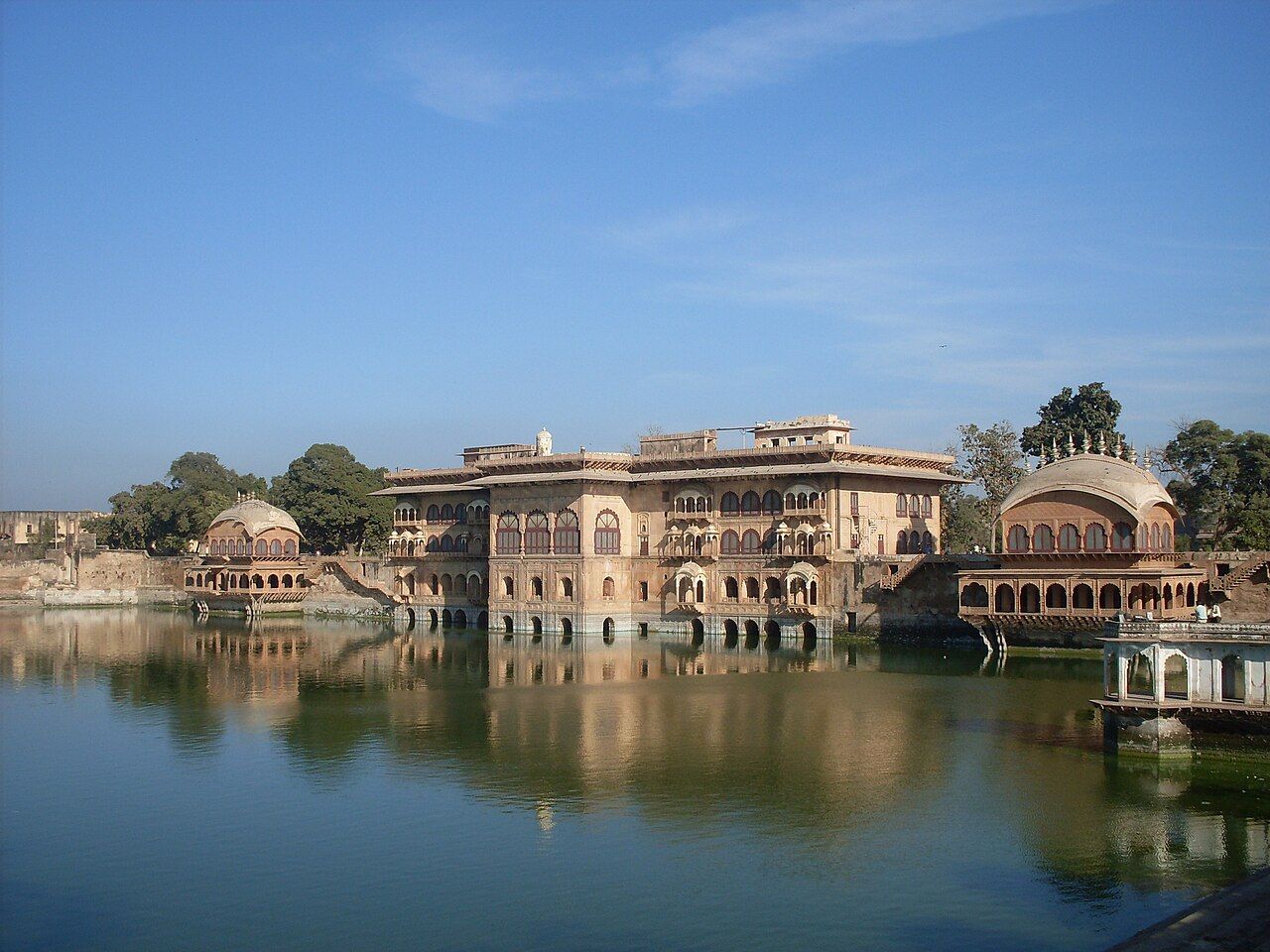
The largest building is Gopal Bhawan, which rises directly from the edge of the tank called Gopal Sagar. From the far side of the water you see its arched facade reflected in full, with two smaller pavilions with curved roofs standing at either side like moored boats. Inside, some rooms still hold furniture from the later royal period, giving a sense of how the palace was lived in.
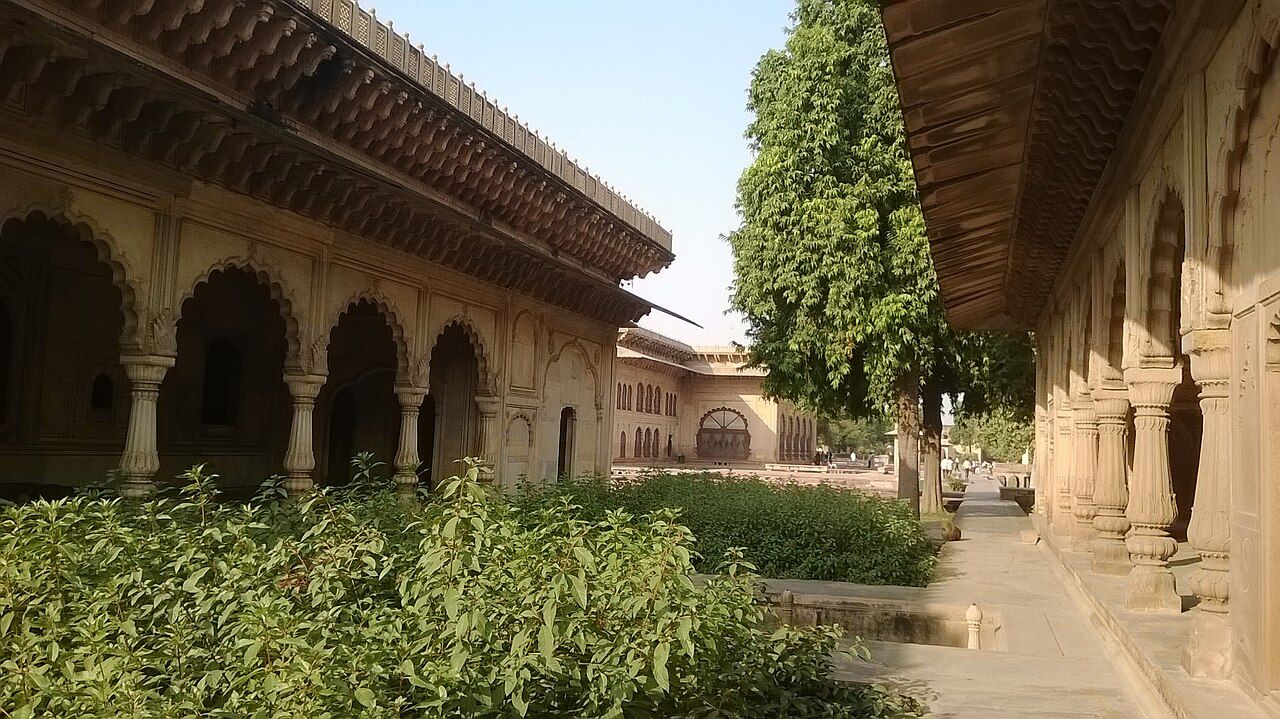
Around the gardens stand other pavilions, each with its own name and purpose. Keshav Bhawan, a pavilion built for the monsoon, is known for an ingenious system said to have produced the sound of thunder and the fall of rain around those sitting inside. Suraj Bhawan is faced with marble, and other halls line the gardens with long colonnades of carved pillars. Look up at the eaves and the brackets: the stone is worked to look like wood and cloth, and the shadows they throw change through the day.
Gardens and fountains
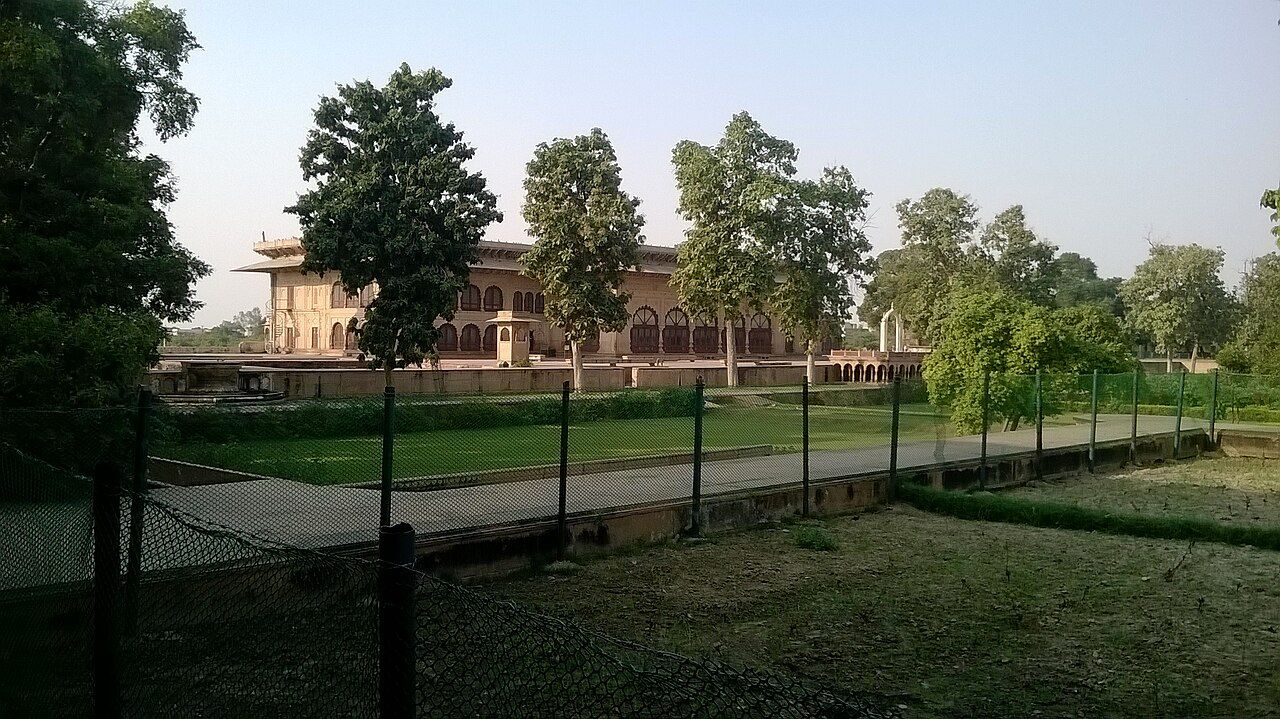
The gardens are laid out in the Mughal manner, in squares crossed by paths and narrow water channels. Set into the channels and pools are hundreds of fountains, fed from a large reservoir on the roof of one of the palaces. In the past, it is said, the water was coloured with dyes for festivals, so that the jets ran red, yellow and green.
 Worth the detour · BharatpurKeoladeo, the bird marsh at Bharatpur
Today the fountains do not run every day. They are turned on for special occasions, such as around the festival of Holi or during a local fair, when the gardens fill with people and the channels with water. On ordinary days the dry channels and still pools have their own appeal, and the lawns and trees make the gardens a pleasant place to sit.
Visiting the palace
The palace complex is a protected monument, and you buy a ticket at the gate for a small fee. Some rooms are open, some closed, and the arrangement of what you can enter changes from time to time. Allow two or three hours to walk the gardens, look into the open halls and sit by the water.
- Come in the morning or late afternoon; the gardens have little shade in the middle of the day.
- Wear comfortable shoes, as the paths are long and some steps are uneven.
- Carry water; there is little on offer inside the complex.
- Respect the barriers and do not climb on the fountains or channel walls.
Photography is generally allowed in the gardens, but rules inside rooms may differ, so ask at the gate. The view across the tank to Gopal Bhawan is best in the early morning, when the water is still and the light is low.
Fountain days and quiet days
The comfortable months run from about October to March. Winter mornings can be misty and cool, and the light over the tanks is soft. From April to June the heat on the plains is intense, and the gardens offer little shelter. In the monsoon, from July to September, the tanks are fuller and the gardens greener, but the roads can be slow and the days humid.
Festival days are a different experience entirely. If you come when the fountains run, expect crowds, noise and colour, and plan to arrive early to see the palace before it fills.
Combining Deeg with the eastern edge
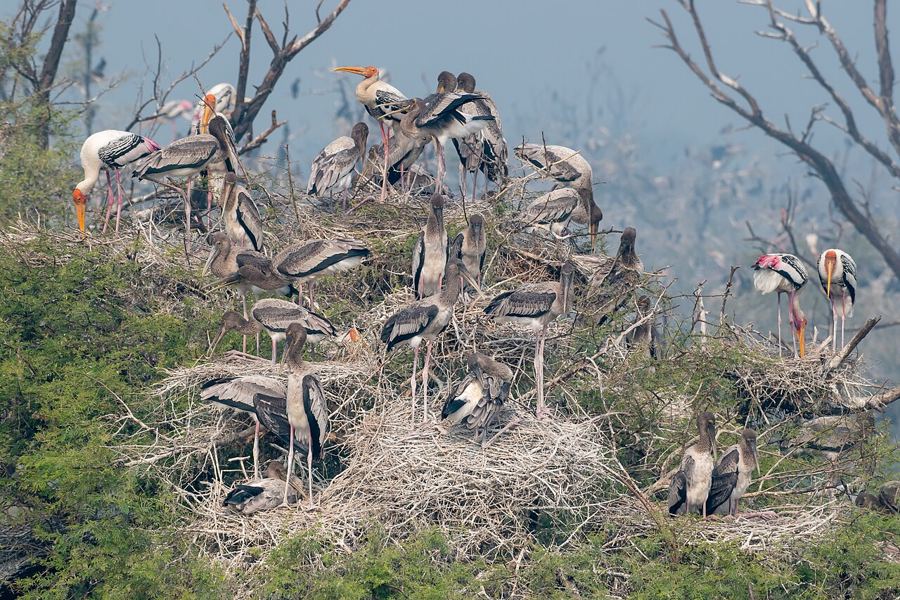
Deeg lies about 35 km north of Bharatpur, and most visitors see it as a half-day trip from there. The obvious pairing is with the bird marsh at Keoladeo: birds at dawn, palaces in the afternoon. Bharatpur itself is well linked by road and rail to Agra and Jaipur, and Deeg also lies within reach of Mathura, a little further to the east.
If you are travelling the eastern edge of Rajasthan more widely, the abandoned town of Bhangarh lies to the west beyond Alwar, and the fort at Ranthambore to the south. Our notes on hiring a car and driver in Rajasthan cover the practical side of linking them.
Next in Eastern edge: Bhangarh, the abandoned town