
Road noteAbout 30 km south of Bikaner on a good highway, so roughly forty minutes each way. Shoes stay outside; the courtyard floor heats up by midday.
The road south from Bikaner runs flat and straight through scrub and sand, past camel carts and the odd roadside shrine, and after about half an hour you reach a small town that would be unremarkable if not for one building. Deshnoke is known across India for the Karni Mata temple, and the temple is known for its rats. Many travellers come out of curiosity, half expecting something grim. What they find is a working shrine, busy with families and pilgrims, where the rats are not a spectacle but part of the devotion.
Who Karni Mata was
Karni Mata was a female sage who lived in the region in the fourteenth and fifteenth centuries. In her lifetime and after it she was revered as an incarnation of Durga, and her following was strongest among the people of the Thar. The ruling houses of Bikaner and Jodhpur both looked to her as a patron, and stories link her blessing to the founding of their forts and their fortunes. That royal connection is one reason the temple at Deshnoke grew grander than a village shrine usually would.
The rats belong to her story. Devotees hold that they are reborn members of Karni Mata's family and followers, and so they are called kabbas, little children, and treated as kin. They are fed with grain and sweets and given milk in wide metal bowls, and they live in the walls, the corners and the drains of the temple, safe from harm. To kill one, even by accident, is a grave matter; tradition asks that a rat made of silver or gold be given in its place.
The marble front and the silver doors
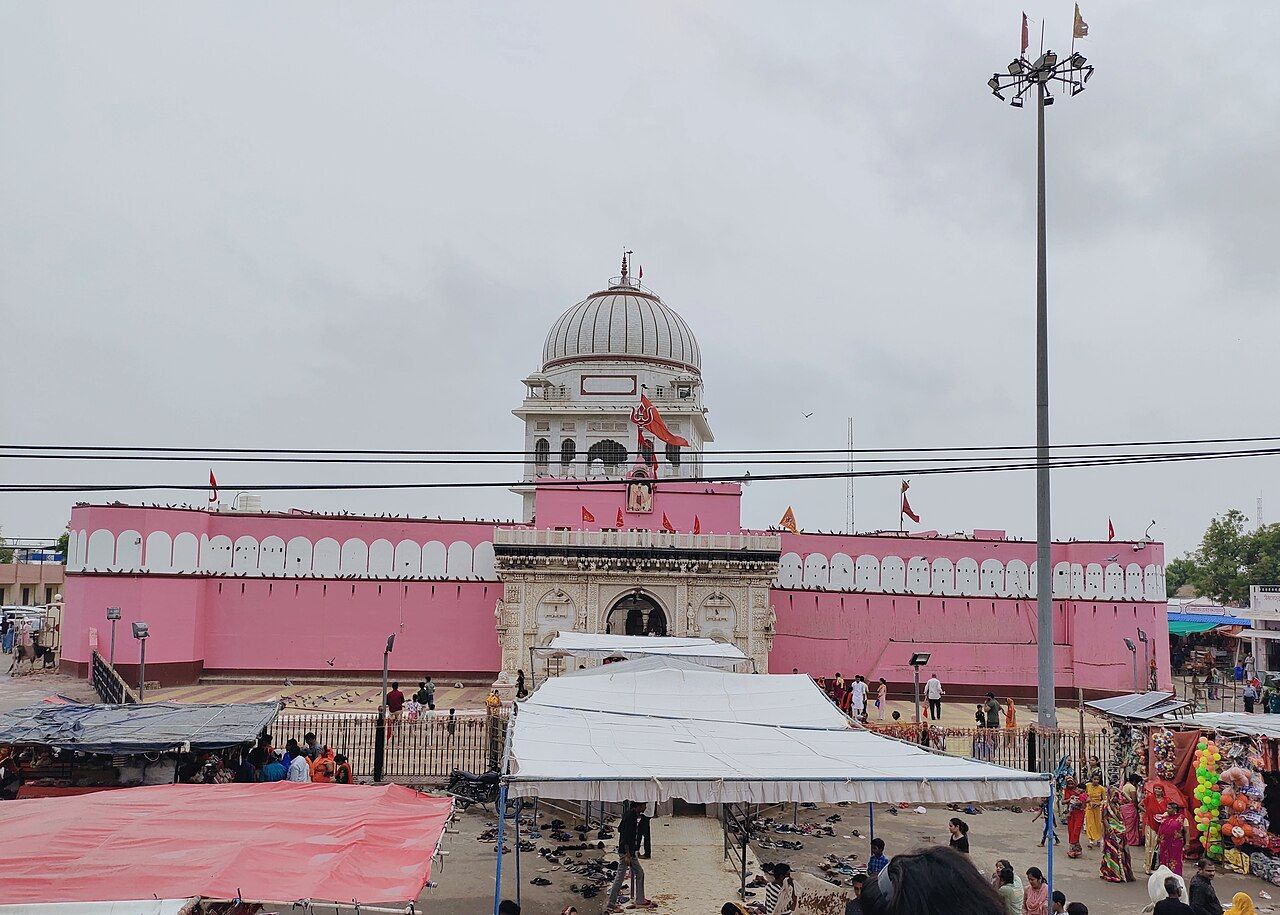
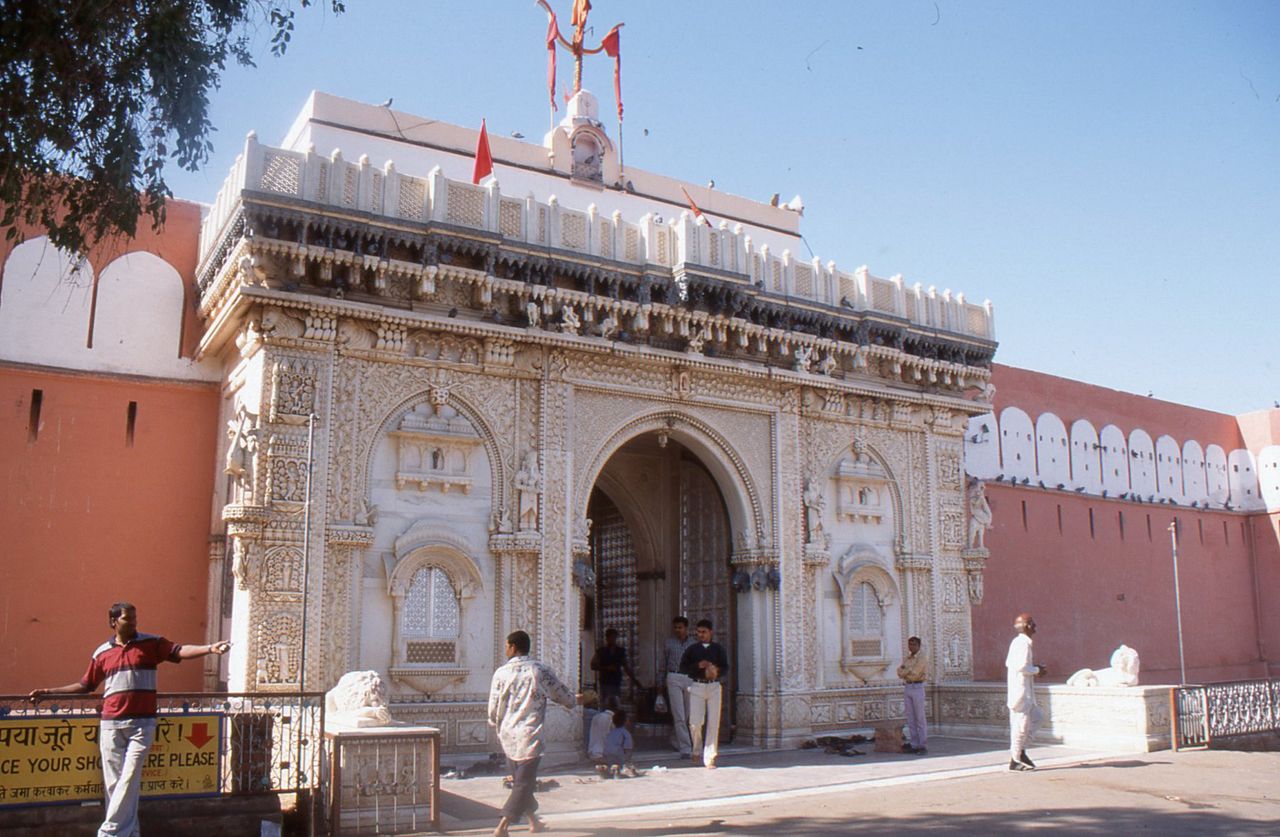
The present front of the temple is newer than many visitors guess. The marble facade with its carved panels, and the silver doors inside, were completed in the early twentieth century under Maharaja Ganga Singh of Bikaner, the ruler who also did much to modernise his state. From the open ground before the temple you see a long pink wall with a pale dome rising behind it, and in the middle the white marble gateway, worked with niches, brackets and figures.
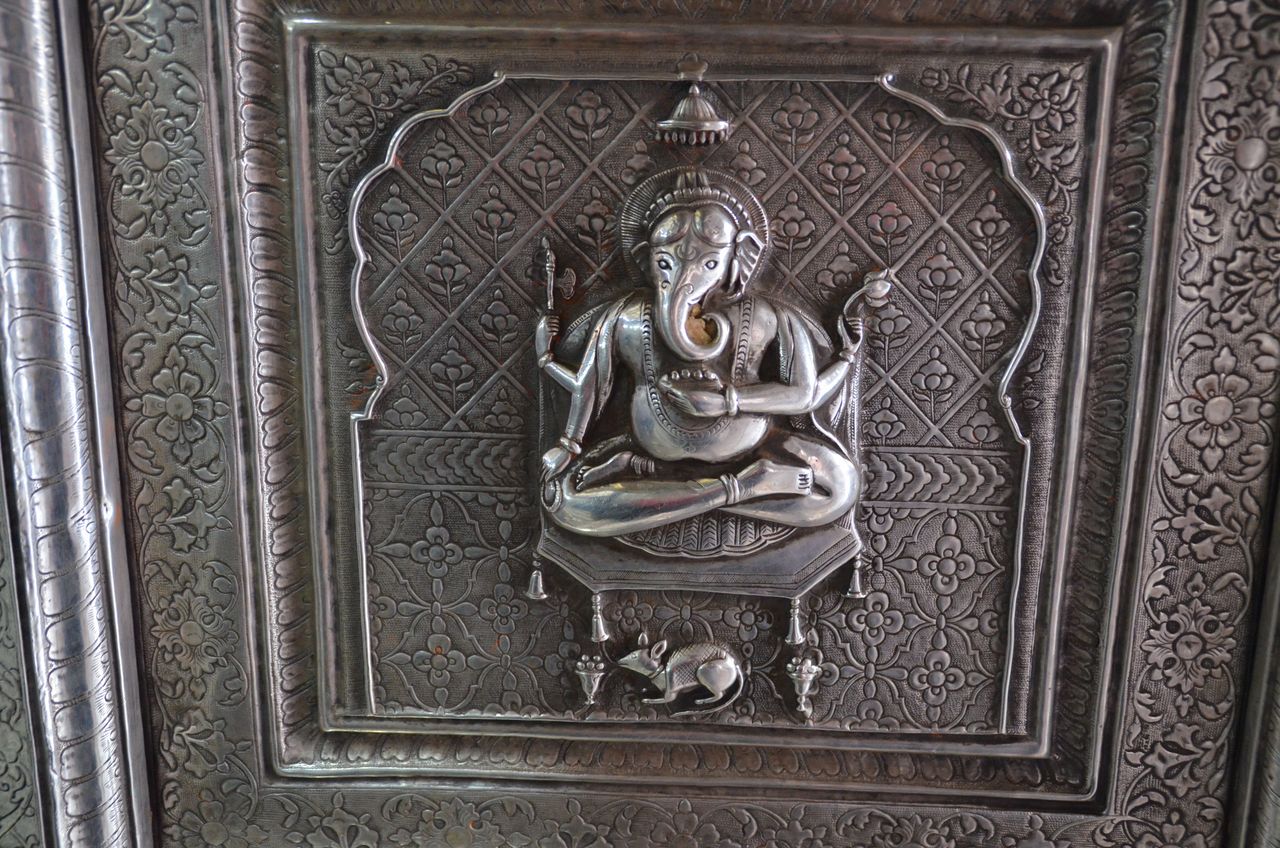
Inside the gate, the inner doors are faced with embossed silver. Stand close and the panels resolve into deities, flowers and lattice patterns, all beaten out of thin sheet metal. Look for the panel of Ganesha seated on his throne with a rat beneath him: the rat is his mount in Hindu tradition, which gives it a quiet logic here. Silver of this kind darkens and is polished again over the years, so the doors are rarely the same shade twice.
Barefoot among the kabbas
As at every Hindu temple, shoes come off before you enter. Here many visitors, Indian and foreign alike, keep their socks on, and that is accepted. The floor of the courtyard is marble and stone, it is walked on by thousands of feet, and it is shared with the rats and whatever they leave behind. Bring a thick, old pair you will not mind washing hard or throwing away. A small plastic bag for them afterwards is useful.
There is usually a place near the gate to leave footwear, sometimes watched for a small fee or a tip. Dress as you would for any temple: shoulders and knees covered, nothing too revealing. Photography rules have changed over the years, and a camera may carry a small fee, so ask at the gate before you raise a lens.
 Worth the detour · BikanerJunagarh Fort in Bikaner
Walking among the kabbas
Once inside, slow down. The rats move fast and without warning, and they gather thickly around the feeding bowls and along the edges of the courtyard. The custom is to shuffle rather than stride, sliding your feet along the floor so that you never bring a heel down on anything living. Watch where pilgrims step and do as they do. Children are usually more at ease with this than adults.
A rat running over your foot is considered good fortune, and you will hear people laugh with delight when it happens. Greater luck still comes from seeing one of the white rats among the dark ones. There are only a few, and they are thought to be especially holy, sometimes linked with Karni Mata herself and her sons. People wait patiently near the inner shrine in the hope of a glimpse, and a ripple of excitement goes through the crowd when one appears.
Do not reach for the rats or try to feed them from your hand. Offerings are made in the proper way, through the temple, and the grain and sweets sold outside for the purpose are the usual route. If the sight of so many animals together is too much, the courtyard is small enough that you can see the main shrine, the doors and the bowls and leave within twenty minutes. No one will think less of you.
Festivals and crowds
The temple is busiest during the two Navratri festivals each year, in spring and in autumn, when pilgrims walk in from far across the region and the queues stretch out on to the open ground. At those times the courtyard is packed and moving slowly, and the experience is more about the crowd than the building. On an ordinary weekday morning outside festival time it is far calmer, with local families coming and going and room to stand still by the doors.
Early is better for another reason. Bikaner district is hot for much of the year, and by midday a stone floor in the sun can be uncomfortable even through socks. From October to March the mornings are pleasant and the light on the pink walls is soft; from April to June it is worth arriving soon after opening and being back in the car before the heat builds.
Fitting it into a Bikaner day
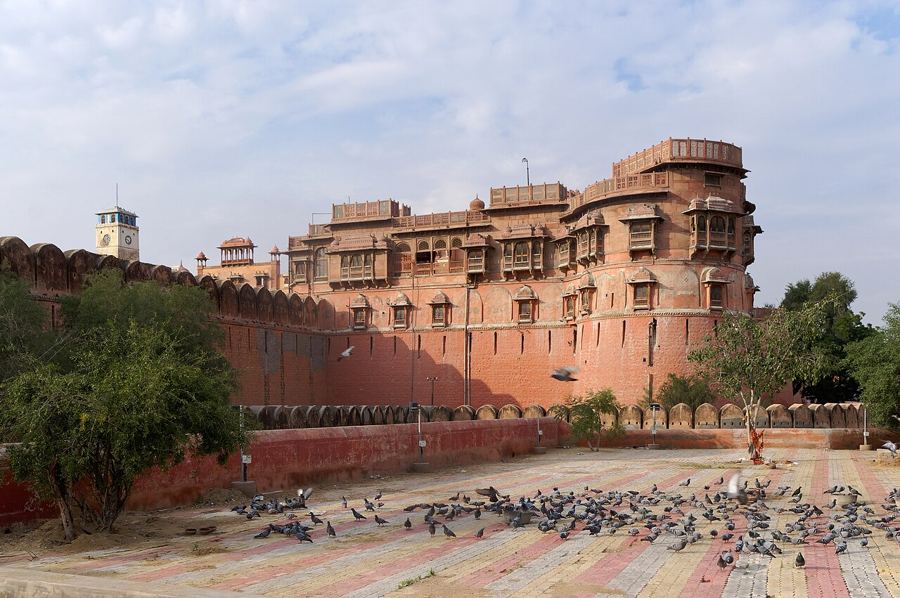
Most people visit Deshnoke as a half-day trip from Bikaner, and it pairs well with the city's own sights. A sensible plan is the temple first thing, then back into town for Junagarh Fort and its painted rooms once the morning crowds there have thinned. If you are travelling on towards Jodhpur, Deshnoke lies on the way south, so you can stop here with your bags in the car and keep going.
The drive itself is straightforward on a good highway, and a car with a driver is the easiest way to manage it; there are also buses and local trains through the town if you are travelling light. Our notes on hiring a car and driver and using buses and trains cover the practical side. Further down the same road, the old temple town of Osian makes a quieter counterpoint: stone carving rather than silver, and silence rather than crowds.
A few words on respect
It is easy to treat this place as a curiosity, and many write-ups do. The people around you are not there for curiosity. They have come to see Karni Mata, to make an offering and to ask for her blessing, and the rats are part of that. Keep your voice down, keep your reactions small, do not film people at prayer, and take your cue from the families around you. Leave a little time at the end to sit on the steps outside, put your shoes back on, and watch the next group take theirs off.
Next in Desert towns: Pushkar, its lake and its ghats